The Distribution Crisis & Our Revolutionary Opportunity
By Aymar Jean Christian & Elijah McKinnon, OTV
If you’re a filmmaker reading this, ask yourself: when you dream of your project’s most successful outcome, what do you see?
Be honest!
How many of you pictured:
A red carpet with step-and-repeat featuring your project’s title next to Netflix, Max, etc.
Your project on an app like PBS, Hulu, etc.
Your project’s name on a marquee at Sundance, Tribeca, etc.
An Academy Award, a Peabody, etc.
Your project in a large commercial movie theater
A policy or cultural shift in your community
Your project screening in a small gallery or community space with folded chairs
Your project screening small theater at a festival you had not heard of before you started the project
Your project showcased on an app with less than 100,000 subscribers
Clips from your project spreading on TikTok and YouTube
You see where we’re going with this. Historically, most filmmakers will respond with some combination of 1–5, because those are associated with attracting the resources and recognition necessary to get a return on the massive investment of time and money it takes to produce something (though, increasingly, these resources and recognition come with significant caveats). Number 6 is often seen as an after effect of achieving 1–5. Numbers 7 and 8 are what they do because of some intimate connection to your community or issue, or it’s the thing they have to write grants for to raise enough money to finish the project and show it will have “impact.” For many, number 9 is failure or a backup, and 10 is marketing.
We’re here to tell you that numbers 6–10 should be part of your vision for success. Numbers 1–5 are nice if you’re lucky, and that there may be other outcomes you never considered.
Achieving 1–5 is getting harder. We face a crisis in distribution. Many other posts on this blog have already discussed this. Fewer corporations control an ever-dwindling number of distributors, studios, and financiers for films and series, resulting in an environment where every storyteller faces increasing barriers to getting their project made and seen. Even when this happens, the amount of funding and visibility available are often less than historical norms. Theaters are going out of business and focusing on blockbusters. Streaming platforms focus on what’s showy, trendy, and loud: trauma, tropes, pulp, and celeb-reality trash. As soon as the industry opened up to women and people of color, budgets went down. After a series of strikes, historic inflation and corporate takeovers, now even those opportunities are gone.
What are we to do? We need, as Karin Chien so beautifully and persuasively argued in her must-watch Color Congress keynote, “a new distribution future from the ground up.”
We have to stop seeing Sundance and Netflix as success. Instead, she says: “the solution is to create and sustain many, more, new, different structures of distribution.”
Easier said than done. Our media system has been and remains hostile and harmful. Doing this repair work is challenging. Karin started her talk by talking about caring for a sick family member. Anyone who has done care work knows it is among the hardest jobs one can do. It is hard on the caregiver and on the person healing. The people leading organizations in Color Congress have accepted this “duty of care” for our ailing media system. As Sonya Childress wrote on this blog, this work is not easy: “No amount of passion and commitment can overcome the accumulation of pressures and stresses.”
We know this from experience. We are co-founders of an independent and non-profit distribution platform, OTV | Open Television, designed to repair the systemic exclusion of storytellers who identify with multiple communities historically disempowered because of their race, gender, ethnicity, sexuality, disability, religion, and more. We not only offer fellowships to develop artists and their projects, we also release those projects on an app that’s available on almost all devices and physically in cities around the world, rooted in Chicago or the indigenous homelands of the Ojibwe, Potawatomi, Odawa, and many other tribes and nations.
We’re not here to tell you that we are the answer to the crisis in distribution. Nor are we here to tell you to not submit your film to Sundance. In fact, we’ve collaborated with Sundance for years, and one of us executive produced a hybrid documentary that premiered at the festival this year. Nor are we saying that you shouldn’t sell your project to Netflix. Over the years we’ve helped dozens of artists who have sold series or become staff of the major streamers. (Though, many of these folks who’ve been to Sundance or worked with streamers will tell you it’s not all it’s cracked up to be!).
We’re simply here to invite you to expand your understanding of distribution in service of cultivating a broader and deeper ecosystem where more can thrive. OTV may have made its name as a pathway to Hollywood, but that was never our only or primary goal. We started by exhibiting in small Chicago galleries and community spaces, screening short-form projects most people have never heard of, offering non-exclusive distribution agreements that maxed out at $2,000, a small part of any project’s overall revenue strategy. We started out by offering more than distribution. We connected filmmakers to each other and their communities, unlocking hidden value. In his book forthcoming on MIT Press, Reparative Media: Cultivating Stories and Platforms to Heal Our Culture, our co-founder AJ Christian writes that this unglamorous, local, community-based work is the only real way to heal the harms in distribution created by unchecked capitalism.
“We can create our own distribution systems…Start local. Start small. Start where you are, so that you understand the audience that you are serving. You have to connect to your community so they can help you navigate how grass roots distribution works,” as CR Capers, founder and CEO of Harlem Film House, said in a Color Congress member meeting.
This work always starts humbly. But now our co-founder and executive director Elijah McKinnon leads a thriving organization with a full-time staff eager to support storytellers.
We’d love to share how Elijah and the OTV team do it!
A New Model: Disrupting the Relationship Between Filmmakers and Distributors:
“What does it mean to have real support, though, from these spaces? Is it encouraging the autonomy of these filmmakers, are they able to keep the integrity of their films?” — Oluwaseun Babalola, Founder and executive director of Kosinima, Inc.
To help ground our vision for a new distribution ecosystem, we’d like to share OTV’s premiere documentary program: Brave Futures. Brave Futures is a 48-hour short film race hosted in cities around the U.S. and globally. The OTV team offers prizes for winning films, production support and screening of whatever work that is created. It’s our way to inspire first-time and emerging filmmakers to document their lives and communities. While we accept scripted projects, the vast majority are experimental documentaries blending reality and fiction to explore communities whose stories rarely find global distribution. To date, this initiative has activated over 200 artists and has produced over 30 short films, all available to stream on our app. The next installment of Brave Futures is set to take place in Salvador, Bahia in October 2024, a powerful Black community rarely showcased in film!
Elijah devised Brave Futures using data from our distribution platform. OTV leverages data to build community, expand our audience, and foster deeper global connections. Analyzing viewership data via our app, we saw that some of our viewers were living in opportunity-challenged film markets outside the U.S., allowing us to pinpoint areas where emerging storytellers could benefit most from artist development support and resources. We were surprised to find people in Africa, South America, and Europe watching a Chicago-based app with a small marketing budget!
OTV’s approach begins in Chicago, where our hyper-local values are deeply rooted. We then travel to these identified markets — including South Africa, Brazil, Mexico, Germany, and the U.K. — offering our unique ethos (like our Brave Space Agreements or Ethical Governance Commitments) and production expertise while partnering with local community organizations, production companies, and art institutions who breathe life into our mission. These collaborations invite filmmakers to reimagine their relationship with distributors, ensuring that the principles of inclusivity and representation we champion are upheld globally.
Central to Brave Futures is the role of artists and community members in selecting the regions and types of stories OTV prioritizes. This collaborative model is innovative and relies heavily on trust, a crucial element often missing between filmmakers and distributors. By involving the community in decision-making, we ensure that the stories we amplify are authentic and resonate deeply with local and global audiences alike.
Through Brave Futures, OTV creates a dynamic exchange of ideas and cultural narratives, empowering filmmakers from diverse backgrounds, often Black, indigenous, people of color, gender-expansive, disabled and LGBTQ+. This program not only amplifies overlooked voices but also strengthens the global storytelling community by fostering meaningful connections and providing a platform for authentic, localized stories. By bridging gaps and building networks, OTV continues to push the boundaries of traditional media, ensuring that emerging talents from all corners of the world have the opportunity to shine.
Brave Futures shows how independent distributors are doing the slow, unglamorous work of cultivating new storytellers and communities, offering, as Oluwaseun Babalola says above, “real support.”
OTV is not the only one. Behind the scenes, platforms like Kosinima’s Soju and DeShuna Spencer’s Kweli TV are investing in creators corporations are not, building a strong base of storytellers that bigger distributors later exploit. “I’m usually first money in for a lot of these productions. And so that’s the case the majority of the time, because they can’t find funding for their subject matter that they’re looking for,” Oluwaseun Babalola said.
Some indie distributors have decent resources. We know places like Mubi and Criterion can offer distribution deals that can significantly contribute to a film’s bottom line. But, as Babalola said on the CC call, they focus on the more “arty” films, often ones that have screened at the most exclusive festivals like Cannes, Venice, Sundance, and more. Getting on these platforms is as difficult as getting on Netflix or PBS, and they don’t offer much beyond licensing to their app. Other successful indie distributors like Zeus release reality programming focused on clout, conflict, and celebrity, not the healing narratives we need. These more sustainable indies are not focused on cultivating community.
That’s because the work of cultivating community around storytellers and stories is labor intensive, non-exploitative, and unsexy. Many platforms who have tried to do this have not lasted. We mourn the transition of platforms like Samah Ali’s Sisterhood Media, which for five years distributed documentaries from women of color while also offering programs for building relationships and support.
How do we support the distributors working to create a better ecosystem? It takes all of us. Existing distributors have more work to do expanding support and offerings, but filmmakers can also help us by reframing what they think of as success and embracing what some have called “the double bottom line.”
CALLS–TO-ACTION FOR INDEPENDENT DISTRIBUTORS
Build Non-Transactional Relationships with Filmmakers
Let’s shift from just making deals to fostering genuine, creative connections with filmmakers. Instead of focusing solely on the transactional side, think of it as a creative courtship. Collaborative efforts among indie distributors hold the potential to increase engagement and a broader geographic reach. By building intentional relationships with filmmakers who are breaking traditional barriers, you can pool resources and amplify the impact of their films which is a win-win for all.
Scale Your Audience with Depth Over Width
Instead of trying to reach everyone, concentrate on diving deep into niche communities. Reframe the way you think about success and impact. It’s not just about numbers; it’s about ensuring voices are heard clearly and effectively amidst the noise. Think about the ways you can integrate the most intentional and precious strategies into your strategies aimed at combating the “bigger is better” framework.
Create More Transparency Around Your Values and Goals
It’s time to be open about your values and goals; consider listing the process for evaluating and selecting the type of stories that align with your platform’s mission. Eliminate confusion by being explicit. This transparency builds trust and fosters long-lasting partnerships. Clarity is equitable.
Challenge What Role Confidentiality Plays in Equity
Let’s discuss the impact of confidentiality on fairness and transparency. There is immense potential for clarity and equity in the independent film landscape. Being more open about distribution terms can lead to fairer deals for diverse filmmakers. It’s time to rethink confidentiality to ensure everyone gets access to equitable opportunities.
Redistribute the Power and Responsibility of Platforming Stories and Filmmakers
Are you ready to use your platform for good? Taking proactive steps to redistribute power and responsibility in platforming stories can make a significant difference. Think about the ways you can build audiences’ trust by inviting them to participate in your decision-making process. By sharing power you’re not just amplifying stories intentionally — you’re shaping a more inclusive media ecosystem that addresses gatekeeping and dismantles unethical curatorial practices. We recommend exploring Toward Curatorial Justice developed by our comrades at Restoring the Future.
CALLS–TO-ACTION FOR INDEPENDENT FILMMAKERS
Join Coalitions and Networks Disrupting Indie Distribution
Want to expand your knowledge and realm of influence? Align with coalitions and networks that are reimagining all facets on media-making. When aligned with fellow disruptors you hold greater capacity in boosting your audience engagement and ultimately the reach and impact of your film. Break free from mainstream constraints and explore new alternatives. We invite you to explore the offerings of BVAC Media, Mezcla Media Collective, Brown Girls Doc Mafia and Color Congress.
Support and Invest in Independent Media Platforms
Ignite the independent revolution by supporting independent media platforms! Invest in your local and non-commercial platforms that are doing the work to shine a light on the unseen. Your support is more than financial; it enriches the cultural landscape and amplifies indie voices. Invest wisely and watch platforms with values create sustainable ecosystems. We ask that you consider becoming a paid member of KweliTV, Fearless, and OTV.
Challenge and Change Perceptions of Indie Distribution Platforms
Let’s shake up the status quo! It’s no secret that audiences crave authenticity and diversity: Challenge outdated perceptions and show that independent storytelling is a vibrant, essential part of today’s media landscape and not just an alternative to mainstream films. Lead the charge in transforming these perceptions and making waves in the indie scene but understanding the distribution ecosystem. We recommend exploring The Distribution Playbook developed by our comrades at Seed&Spark and Kinema.
Cultivate a Deeper Understanding of Intended vs. Realistic Impact
It’s time to get real about the impact of indie films! How are you aligning your creative vision with audience expectations? Dive into demographics, resonate across regional divides, and scale your stories with precision to maximize impact and relevance. Go deep instead of wide.
Decolonize the Imperial Approach to Reach, Audience, and Scale
Let’s rewrite the playbook for global indie success! Embrace inclusive strategies that defy traditional, imperial standards. As we strive to build a more pluralistic society, think about your role in building bridges that cultivate empathy. Break free from outdated tactics, connect authentically, and cultivate a truly inclusive indie universe. Decolonize, diversify, and lead the way toward a media landscape that reflects an honest and accurate representation of our society.
Dr. Aymar Jean Christian and Elijah McKinnon are the Founders of Open Television, a non-profit streaming platform and media incubator for intersectional storytelling, with artists and their creative visions at the center. OTV’s mission is to transform the way film, television and entertainment industries support independent artists and communities marginalized by their race, gender, sexuality, class, disability or nationality. Through intentional artist development and holistic community development the award-winning organization provides a network of care to identify, activate and mobilize the next generation of storytellers. Elijah McKinnon currently serves at the Founding Executive Director and Board Secretary and Dr Aymar Jean Christian serves at the Board Treasurer.
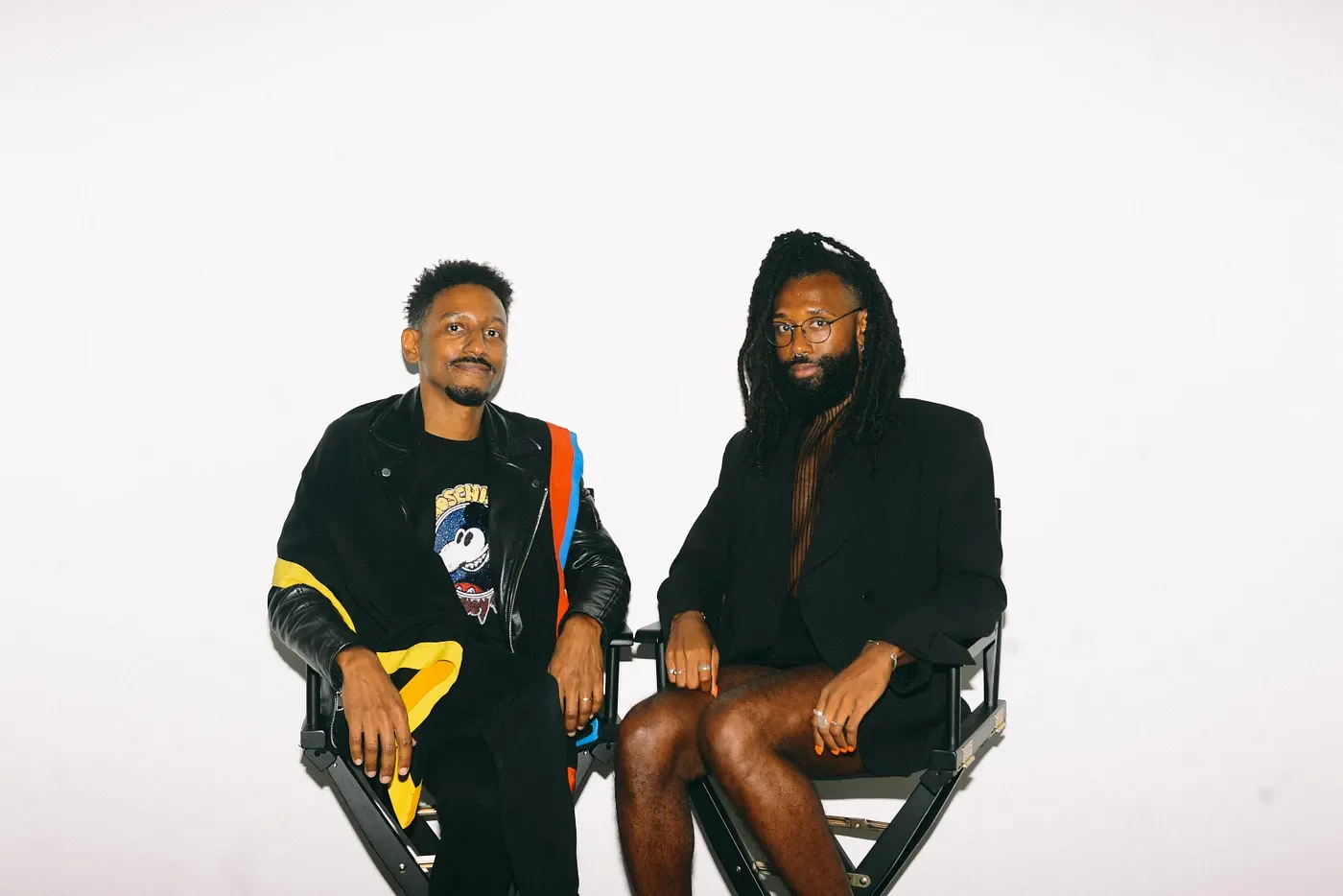
Dr. Aymar Jean Christian (left) & Elijah McKinnon (right)