Comfrey Films Explores Storytelling for Wound Closure
By Joie Lou Shakur
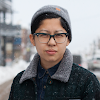
My name is Joie Lou Shakur.
I am a storyteller, medicine maker, and village organizer.
LAND
Until the start of 2020, I considered myself to be nomadic. I come from a place where the culture pre-colonization was one of moving towards the things that you need. In the Caribbean, people often island hopped from Lesser to Greater Antilles depending on the agricultural needs and demands of the seasons and land. This practice was infused in me from the Arawak and Taino peoples who stewarded my great grandmother’s maroon backyard in Fruitful Vale, Jamaica long before I took my first breath there. I can resonate with animal migration patterns and I also realize that this is how I ended up where I am today, in Durham NC, a landmass stewarded by the Eno and Oconeechee people pre-colonization. I’m an immigrant and nomad at my core and for the first time I started to root like the trees around me, resonating with the trees and their commitment to place, their belonging on this Earth. When I arrive at a place, with or without my camera, I can’t help but feel the stories of life that exist/ed there. The energy of place vibrates against my pores, ripples through the very melanin coming through my skin. As an herbalist and medicine maker, I understand that the land is committed to working with me/us/humans/life. It gives medicine and is committed to nourishing and healing all that is alive, including itself. It has no other nature. The land holds stories. Every place is a library and archive of all that was and is alive there. So my storytelling is heavily place based. Geography matters. The land asks me, what is the life that lives here (now and across all of time) saying to us now and through all of time? What does this soil want us to know? What warning does each tree ring offer to us so generously? What has been loved and nurtured here? What has been neglected here? Land has taught me to listen for the stories around me, the stories that don’t speak with words but are profoundly telling their truths. I’ve found that if I pay attention to the land, it is always telling me a story about itself and about who I am in relation to this place and Earth.
BODY
My body has been consistently here. Ever since I was born it has held me and every experience I’ve had. I feel both saddened and curious by the reality early 2020 was the first time I really noticed and embodied this truth. I’ve begun a process of appreciating and loving my body back. My body teaches me that life is about feelings, that being alive is about feeling in real time and letting those feelings be free. I have lived with chronic pain for about 5 years now and in that time I’ve tried every way to completely escape feeling and being in my body. Prior to that I experienced so much emotional and mental anguish that I was committed to growing out of the ability to feel what was in my body and instead opted to feel other things like happiness, excitement, and love, which I sourced from outside of my body at the time. What existed in my body primarily was trauma, grief, and exhaustion. My body has been a place that holds truth, and stories must be based around some form of truth. So my body became a huge part of my storytelling craft. But whenever the creative process ended, I would go back to manipulating my body to feel something other than what was true and present inside of it. I’ve learned that this is futile and I learned to surrender to my body and the truth it tells me about myself, the places I’ve been, the things I’ve experienced, and the people I’m around. The practice of being in my body teaches me about the stories I can untangle and make space to unfurl inside of me. Owning my feelings has been the most direct path I’ve found to owning my body. Owning my body is extremely important to me as a trafficking survivor. Owning my body means owning the feelings and truths that exist within it. Oppression and trauma taught me that my feelings were unsafe to have and that my body was therefore an unsafe place to be. Today, I am learning that my body is my safest place and that through telling the stories that live inside of me and owning everything that exists within my body, I can redraw pathways to heal my past, my spirit, and my body.
STORY
I am named after Miss Lou (Louise Bennet Coverly), Jamaica’s late poet laureate. I can still remember being a small child and coming alive from the stories that Miss Lou would tell and the pride that she brought to Jamaican culture, Black culture, and the culture of colonized people. The first books that I ever read that weren’t a forced part of the British or American Colonial projects were Miss Lou’s collections of poems and prose. I would memorize them and deliver them to whoever would listen. I would mimic Miss Lou’s intonations and gestures and her laugh — she utilized laughter in such powerful and inviting ways in her work. Miss Lou, in my world, is the epitome of story and the process of surrendering to the narrative. In moments when I would watch Miss Lou deliver stories in the town square or when I would put on my best imitation of her in my backyard, I witnessed people, including myself, heal. I watched as laughter and pure joy oozed out of people who had made a home out of grief and sadness. I watched pride sprout from places that I knew to be barren or latched with shame. I felt and feel this same shift in myself each time I experience a story that I resonate with. In between delivering stories, I longed for each moment that I’d get to embody the next story, to come alive. Each story was a genuine unfolding and re-membering/convening of the parts of me that had no place to grow or thrive. Storytelling reengages these faithful parts of my body that even I disown, and the experiences within me that create resonance with other life around me.
When I am most alive, these three things, land, body, and story are simultaneously turning over inside of me and spilling out of me. This is the well from which my creative and spiritual practice overflows. This is the pathway through every production and new life that I birth onto this planet. This is how I’m healing and sustaining the abundant LIFE that is me.
STORIES THAT HEAL
My story is an opening. A cracking open of myself as offering, as portal. So you can travel a bit through the veins of who I am and where I’ve been. I know my body’s determination to heal, so I like to visualize that each story, each portal or opening that I create in myself generates more healing ability and closure for my body. Storytelling then becomes a call and response relationship wherein I call out (name with great details) the wounds that I have held and my body responds by healing them. There is an embedded invitation, to those who, like myself, (re)member that we have much to heal. This is my explicit and fundamental invitation to collaborate. Are you wanting to heal, to share an opening for someone else to heal?
In the past when I imagined the connection between storytelling and healing, I imagined that a storyteller would share their story, we’d get a crew and cast to bring it to life cinematically, and expect that the story itself would cause its audience to reconcile internally or collectively with the concepts that resonate and challenge them. I’ve witnessed this model be an invitation for healing many times through powerful community screenings and post screening discussions. Though this does sometimes work as intended, it left two gaps that I believe could be bridged to increase the healing justice potential for filmmaking and storytelling in general. The first gap is that there is a limit to how deep one can provoke transformation through an inanimate object, a film. Typically films instigate some questions about transformation but the audience can choose to stay shallow or to go deep and keep working with the concepts after viewing. It’s mostly an individual process requiring self-accountability with very few ways of tracking the impacts.
The second gap is that the impact is typically tracked by assessing the healing and transformation that the audience experiences instead of assessing the same for the creators of the film and storytellers, especially when the film utilizes documentary storytelling. How can a community member who shares their story of survival through documentary filmmaking process access healing for the trauma that they’ve survived? How can a film editor or crew member release the stories of survival that travel through their eyes, ears, and body prior to an audience’s engagement with the film? When our cast takes on reenacting a traumatic scene, how can we utilize this as an opportunity to move collective trauma out of and through the bodies of the folks committed to telling this story? There is more room to explore the healing capacity of filmmaking for the story creators.
For the next iteration of our work at Comfrey Films, we’re partnering with trained healing justice practitioners and organizations to increase the healing capacity of Black Genderqueer storytellers and filmmakers. We’re utilizing the filmmaking process to bring access to healing justice services and opportunities for individual and collective healing to our Black genderqueer community. This looks like utilizing services such as individual and group therapy, reiki, yoga, meditation, somatic healing and body work during pre-production, production, post-production, and distribution phases of our filmmaking process. Supporting our storytellers with impactful healing justice resources has meant that during film screening rituals our audiences are then invited out of spectatorship and into the active practice of witnessing their community members. There are facilitated spaces to engage the film’s themes collectively, and there are partnered healing justice providers available for community members to continue engaging and applying the film’s concepts in their daily lives. It takes a village to create a film. Our work explores how this village can access individual and collective healing from trauma through the filmmaking process.