
The Network of Support behind POC Filmmakers
by Sonya Childress
Documentary filmmaking is, for most artists, a labor of love. It takes an independent producer on average 3–7 years to produce a feature-length documentary. And for most of that time the filmmaker (and their crew) work without a stable income, benefits, or a guarantee that their labor of love will reach a wide audience. What motivates most filmmakers is not financial reward but a desire to “make a positive impact on social issues”.
This is especially true for filmmakers of color, many of whom point their cameras inward — to issues that directly affect them, their families and communities. Documentary filmmakers of color are also on the forefront of shifting the ways films are made, by advocating for pay equity, and centering care and transparency with audiences and those who share their stories on screen. This approach to filmmaking goes against the grain in a sector increasingly influenced by commercial platforms and financial bottom lines. Filmmaking as a vehicle for personal and societal transformation requires not just vision, but financial and structural support for that vision. This is where the larger documentary ecosystem comes into focus.
The 93 members of the Color Congress represent a diverse ecosystem of organizations led by people of color with the aim of supporting documentary filmmakers of color and bringing their work to diverse audiences. This is the ecosystem that champions filmmakers who produce bold, powerful work that makes an impact on the lives of people of color. This ecosystem exists largely unseen — operating as the hidden hands that lift up filmmakers and supporting them throughout their careers and across the life of a film. Our ecosystem is made up of film festivals rooted in community, networking organizations that connect filmmakers outside of the media hubs to spaces that can advance their careers, identity collectives that provide mutual aid and support in a field that often sidelines their work, and narrative change organizations that leverage their films to make strategic impact.
Recently, we set out to make this ecosystem visible by hosting our first Annual Arts Showcase. This virtual event featured conversations between two talented filmmakers and the Congress member organizations that support them.
The first of two featured filmmakers was Set Hernandez, a seasoned community organizer and undocumented immigrant from the Philippines and director of the forthcoming film, “unseen”. Set’s earliest filmmaking forays as a teen were supported by Visual Communications, a Los Angeles based organization founded in 1970, created to support the voices of Asian American & Pacific Islander filmmakers and media artists.
Eseel Borlasa, head of Artist Development & Exhibition at Visual Communications, has been a longtime champion of Hernandez . She described their approach to artist support in this way:
“The way we model care is not simply dealing with artists with deliverables. It’s dealing with each other holistically. We break bread, we do life together. I say hi to Set’s mom if I see her at an event. We wanna know how they’re holding up holistically and how we can support them to help them dream and ideate and eventually showcase their work.”
“Unseen” follows the life of Pedro, an aspiring social worker who strives toward his goals while navigating his career as a blind and undocumented man. For Pedro, sharing his life onscreen exposed him to potential risk, a fact that was not lost on Set, the film crew, or the staff at Visual Communications. Pedro explains that his decision to participate in the film was based on trust:
“As a spectator, some of the documentaries that I saw in the past, especially when it was about marginalized communities, felt like it was a group of outsiders trying to dissect a frog. And when it came to this particular crew, I felt that I was with a group of friends. I felt that I was in community. I felt that Set didn’t ask me to be vulnerable. He was vulnerable himself.”
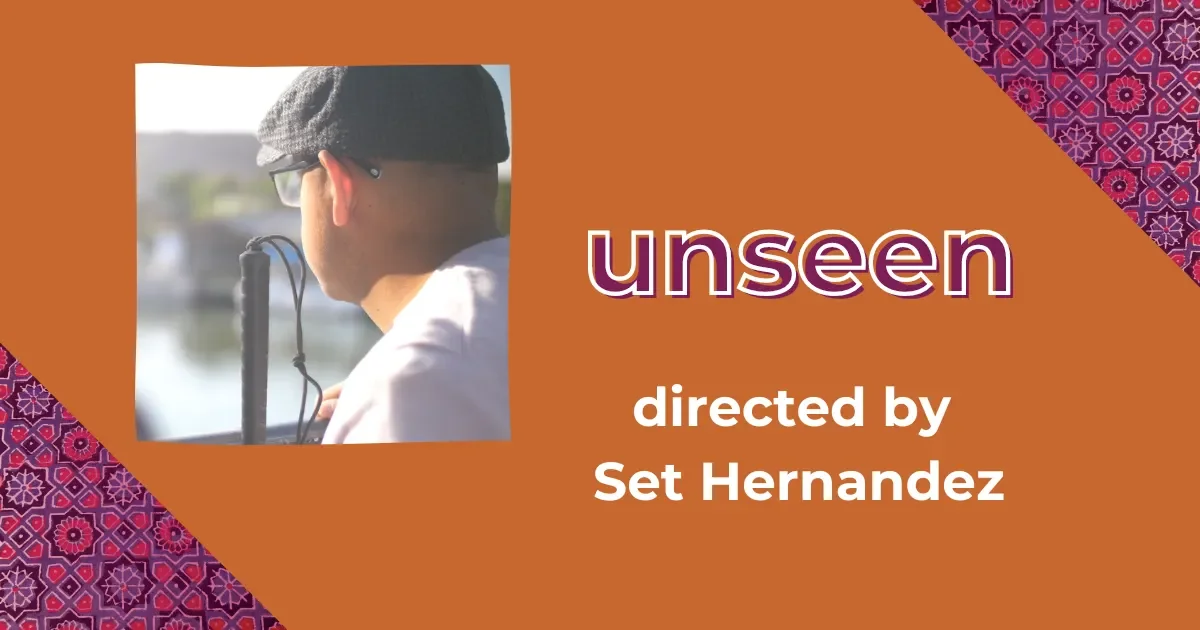
By featuring a blind protagonist, Set was committed to ensuring the film was accessible to audiences across abilities, both aesthetically and practically. That commitment attracted the support of AXS Lab, an organization dedicated to serving people living with disabilities through media and technology, founded by Jason DaSilva, a documentary filmmaker who is also disabled. AXS Lab offered Set one of their first production grants. First money in is a critical lever to raise additional dollars, and Jason’s belief in Set’s vision ushered them on a path to secure the additional resources to complete the film, which went on to win the Audience Award at the 39th Los Angeles Asian Pacific Film Festival.
The path for filmmaker Rodrigo Reyes finds echoes in Set’s journey. A native of Mexico, Rodrigo roots his creative work in both his identity as an immigrant and his mission to portray the contradictory nature of our shared world, while revealing the potential for transformative change.
While working as a court interpreter to pay the bills, Rodrigo was assigned to Sansón Noe Andrade’s case, a fellow Mexican national who was sentenced to life for his alleged role in a gang-related shooting as a teen. The result of that relationship evolved into “Sansón and Me”, a creative work that relies on voice-over of Sansón behind prison walls and dramatic reenactments to tell his story.
Sansón recorded his thoughts on the filmmaking process for the Arts Showcase:
“My experience working with Rodrigo has been a unique learning process. I had never seen my story as a tool for growth and healing and the film changed that. The collaboration was fun and at the same time, it made me reflect so much on where I came from, so that now I know where I’m going.”
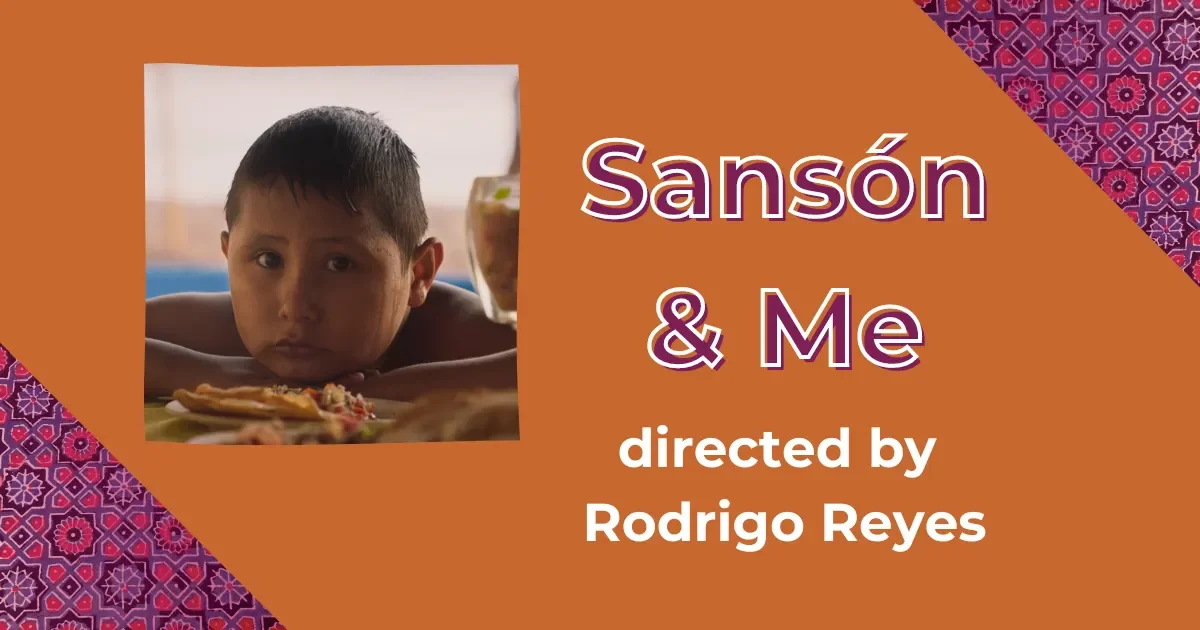
Like Set, building trust was central to Rodrigo’s filmmaking process. He notes,
“If Sansón had been a different person who wasn’t so generous and so brave, it would have been difficult. But he was brave enough to teach me during this whole time, and I’m very grateful for that, and our friendship now is built on that. That idea that we can trust each other. But that was a process, and the film shows it, you know, it shows the trust-building in the film itself.”
Carlos Gutierrez, the co-founder of Cinema Tropical, had been a fan of Rodrigo’s work for years. As an exhibitor of Latin American cinema in the United States, he was all-too aware of the unique challenges that Rodrigo would face reaching audiences, especially with the genre-bending work that has become his calling card. Carlos served as a sounding board and champion to Rodrigo for over a decade, validating the importance and value of his work.
That work fell squarely into the purview of Daniel Forkkio, executive director of Represent Justice, a narrative change organization that uses the power of media to engage audiences in reimagining the justice system. Daniel immediately saw the potential of the film to highlight the arrest-to-deportation pipeline, and agreed to lead an impact campaign for the film. But first, he had to meet Sansón; a request that was surprising and edifying to the young man.
“The first thing that I always want to do is speak directly to the person whose story we are shepherding through the film campaign process. Sometimes it’s a really detailed answer, like since someone had pages and pages and pages that he had written about his story; and sometimes it’s a really simple conversation about, you know, ‘I never want this to happen to someone else, and that’s my goal’. And I try to approach that conversation, not as an impact producer, but just as a human being reaching out to another human being. What do you want? What are you scared of? What are your goals?” Daniel recounts.
In this case, we see the tenuous bond between a court interpreter and client evolve into a deep bond of trust and accountability between filmmaker and participant. That bond extended out to leaders at organizations who built their own connections with the filmmakers and participants, and shared a belief in the power of storytelling to change lives, and laws.
The Arts Showcase was a beautiful testament to the ecosystem that views filmmakers as truth-tellers, changemakers, healers and narrators of the human experience. And what we know to be true is that behind every talented filmmaker lies an entire ecosystem that supports their creative vision from start to release of their films. The leaders of the 93 Congress member organizations bring their own experiences, identities and perspectives to bear, all of which provides fertile ground for creative nonfiction work to thrive. This is the ecosystem we are proud to serve.
You can watch the inspiring conversation in its entirety here.
Rodrigo Reyes’ “Sanson and Me” will have its public broadcast premiere on ITVS on Sept 26.
Set Hernandez’ “unseen” will have its public broadcast premiere on POV on January 1, 2024.