
Cultivating a Community of Film Lovers in Laredo
by Karen Gaytán, Laredo Film Society
When you think of the border, what comes to mind? The answer may vary based on your stance in the political spectrum — some call it ground zero for immigration, others may pinpoint violence, and a small group of others may exploit both to fit their own agendas. For the most part, I think most people don’t really think of the border, but to me, the border is what I call home. A region developed from geographic convenience, the South Texas border is what many people cross when entering the United States for the first time, or where they pass through to visit Mexico. Growing up here gave me the ability to jump in-between cultures, communicate with ease in both, and understand the nuances and differences of empire from two different cultural lenses. It is also a place historically exploited for political gain and wealth accumulation, with little regard to its investment, study, or its people. What narratives have led to this reality, and where can agency be found to resist it?
I was recently asked to share my reflections on the work of my colleagues at Scribe Video Center, Entre Film Center, and Femme Frontera at last month’s Color Congress meetup — all organizations that make up a collective of creators using film and media as tools to empower their communities and resist narratives of capitalism, imperialism, and racism. We stand shoulder to shoulder as we serve communities of color that reject the narrative of oppression and choose to create more self-empowering paths for ourselves and the places where we live. My name is Karen, and in 2018, fellow film lovers and I started the Laredo Film Society — a nonprofit dedicated to cultivating a love for film toward empowering ourselves, our community, and each other in a quest to shift away from the toxic narratives that have existed in our home.
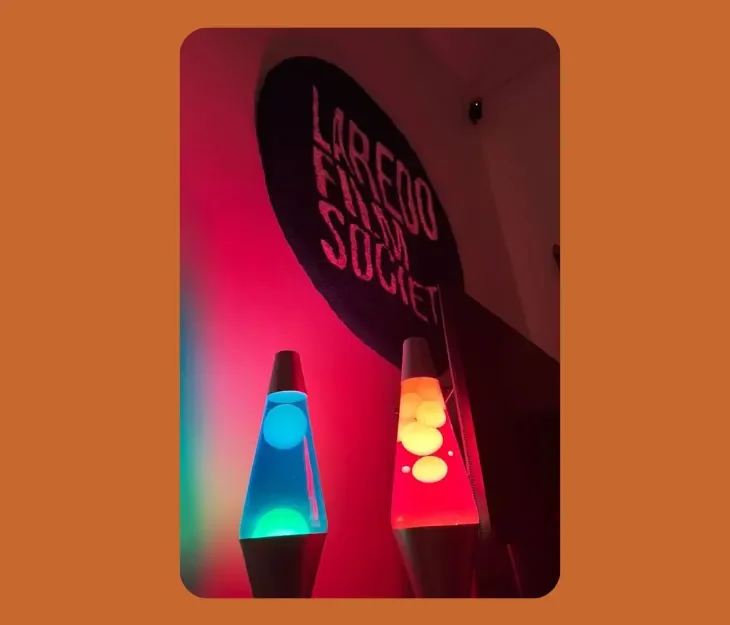
Laredo Film Society
The Laredo Film Society (LFS) was born in 2018 in a commercially underserved region. All my life, movies were tools that crystallized many abstract realities and opened me up to new experiences — experiences that felt out of reach in the ether, but seeing them on a screen made them tangible, real, and understood. When going to the local movie theaters to seek these experiences, all that was mostly available was a commercial blockbuster, and this reality frustrated me. I thought, “I surely can’t be the only one with a yearning for variety and depth.”
A few years prior to starting LFS, I had worked on the set of an independent production that chose Laredo as its primary filming location due to the unique duality of its architecture. A city that could read as both the United States and Mexico on screen, a city in the in-between. This low-budget film changed everything for me — it showed me that a pathway into filmmaking was possible, even for working-class or lower-middle-class people. It wasn’t perfect and at many times messy, but it crystallized the different elements that come into play to bring an idea from script to screen. I thought, “if everyone learned the skills of an effective film set, they could learn the skills to mobilize, organize, and implement ideas.” What seemed like an out-of-reach reality only plausible in Hollywood and New York couches was made possible in a small Texas border town where nothing ever happens. This experience showed me that my dreams weren’t too bold, and that they could exist outside of the traditional commercial industries we’re convinced are the only option.
To many of us who worked in the production, meeting like-minded individuals with a similar affinity to film was a surprise. For years, Laredo had a reputation for being a small town where conservative family values abound but without much more to offer those looking for provocative and engaging cultural experiences beyond that. To make matters worse, those who chose to leave the city seeking to pursue higher education or work opportunities made the mistake of dismissing the assets of the community, often repeating phrases like “there’s nothing to do in Laredo’’ or similar banter. The danger of this becoming the dominant narrative came at the expense of quality of life and a predetermined expectation of failure that slowly eroded everything, not the least of which being public institutions and community life.
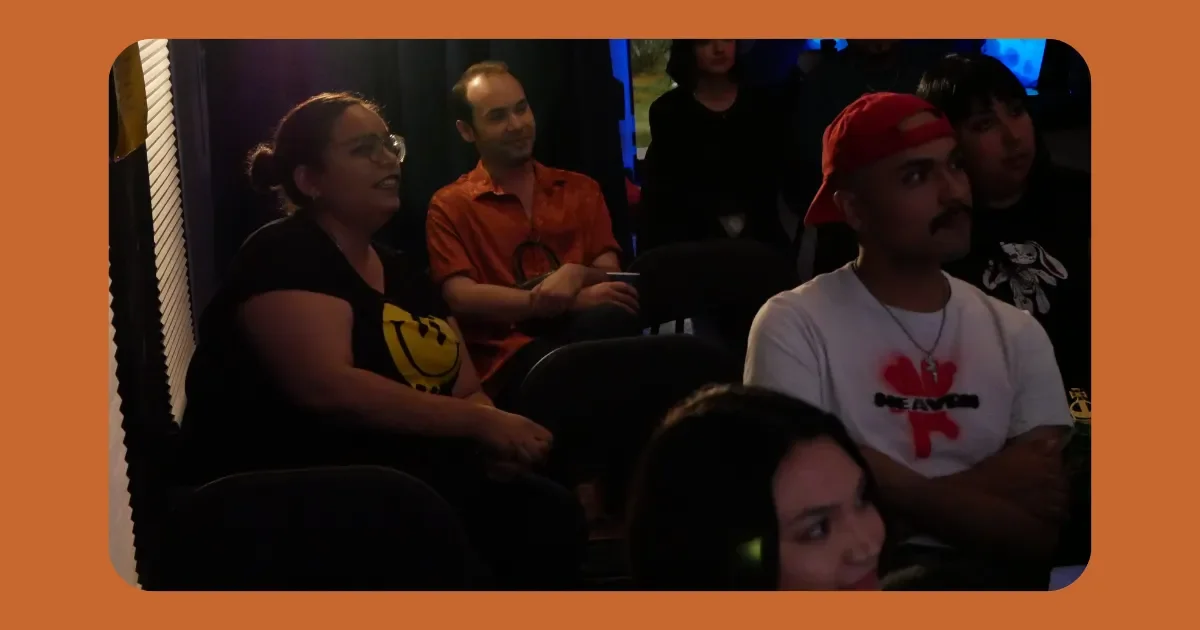
Laredo Film Club
When it came time to find collaborators in the pursuit of cultivating a community of film aficionados, I recruited some of the people I met on this set, and together, we gave life to the Laredo Film Society. Each in our own distinct way, the original founders had been drawn to the corners of the city where culture brewed. In a city filled with narratives of violence and stagnance, of corruption and ignorance, each of us actively sought the spaces that brought people together in a quest to find meaning and connection. To our surprise, we weren’t the only ones with this yearning. Whereas many of our peers left the city with a chip on their shoulder — looking down on local culture, or a lack thereof — we resolved to create our own. It was important that we created a space where cool, high-quality films could be easily accessed while creating an opportunity for dialogue to contend with the reality of living in this liminal space.
In 2023, LFS turned five years old. It’s been nothing but a labor of love and lots of trial and error. Sometimes lots of errors, but mostly love. We aim to create what we wish we had when we were teenagers. A space to meet like-minded individuals, a space to develop our creative skills, and a place that reminds us that the city we live in is cool, too. Unlike the luxuries of a metropolis like New York City or Los Angeles, my peers and I have worked to create our own microindustry of audience and creators who use the power of media to find agency in a reality written long before we were born. The more we focus on this work, the more I’m convinced this is where the future of film lies and perhaps the solution to many social ills. As the pandemic cracked open the faults in our existing institutions, most recently evidenced by ongoing labor strikes in the scripted industry, I believe innovation and transformation will be found in self-sustaining microindustries that embrace remnants of history, invest in untold stories, and work to actively engage the communities they serve.
I have to be honest — I’m not sure that our organization is fully living up to this mission. To change the narrative of the border requires us to contend with complex realities and profit-driven industries that seep into all elements of our lives. But I think film can be the first place where these realities can be challenged. And before they’re challenged, they have to be understood. Where can we begin to find this understanding?
Our team has spent our summer working on a documentary highlighting an old movie theater slated for renovation this year. This experience has led us to interview elders in our community as they reminisce on the glory days of our hometown. What was once a crown jewel for entertainment, a public space for locals to forget their woes and coexist in community, the Laredo Plaza Theater has fallen victim to neglect and decay. While many in the public have yearned for its return, the investment required from public funding and the market to sustain it has deemed it commercially unviable for theater chains to take charge of its operations.
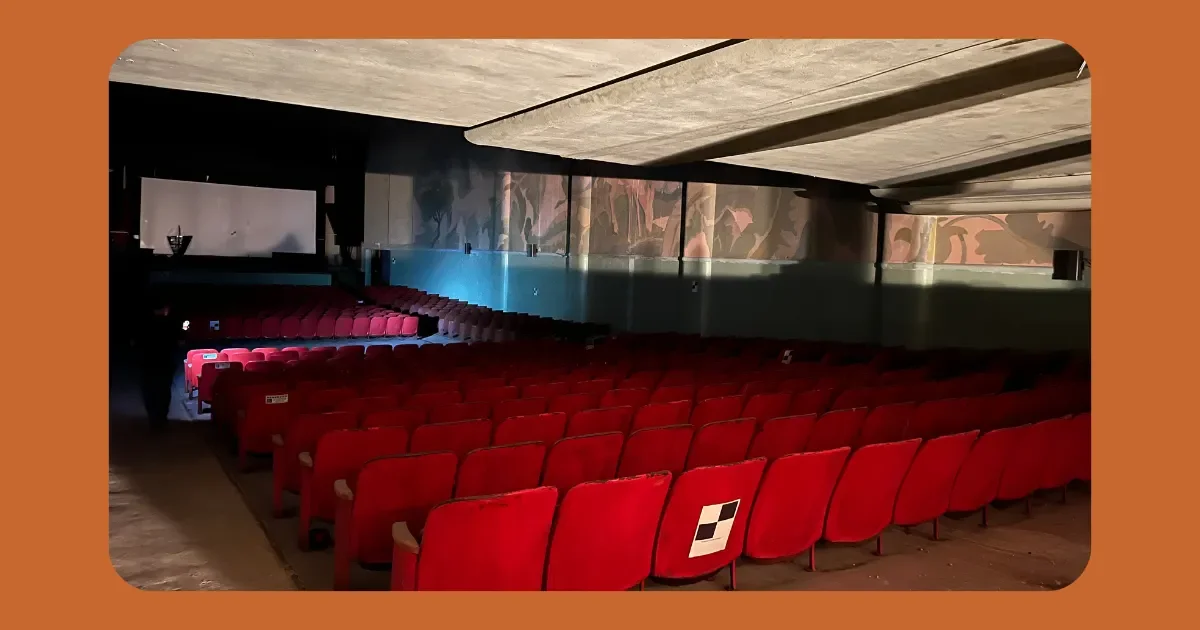
Laredo Plaza Theatre
This building, we have come to find, is the embodiment of Laredo’s own collective aspirations and failures. In the 1940s, the Plaza was one of seven different theater chains that exhibited both Spanish and English-language films, bringing in patrons from all walks of life on a weekly basis. With the creation of highways, an international and hyper-militarized port-of-entry bridge, and suburban development, attractions in downtown Laredo became less frequent, and the theater a byproduct of loss in the name of progress. Slowly, the Plaza went from being a booming center of entertainment to a run-down second-hand movie palace to, eventually, an abandoned space. Looped together by a thread often too common in the border, poor investment in cultural experiences in favor of industry hasn’t created the synergy to see this project back to life. Not in the public funds required for its revitalization, nor in the community that would keep its seats filled if the building were fully renovated today.
Laredoans have shared their desire to bring this crown jewel back for years, but poor planning, unrealistic expectations, and flimsy leadership have failed to see this project to fruition. Some leaders have made empty promises of investment without realizing the mass mobilization a project of this size requires. The truth is that for a project of this scope to be successful, it will require much more than a single hero to come to its rescue — a reality politicians can’t see past most of the time. Movies alone, without a community that speaks to the personal experiences of the public, are sadly not enough of an element to make this succeed. The only ones to lose from these elements are Laredo citizens who are left without public spaces to gather and find inspiration.
While many want to see this theater come back, it is also a politically contested project. South Texas citizens have lived in a historically corrupt region where the elements for a thriving world haven’t existed — we don’t have access to parks, healthcare, or even clean water, and public funding has been used to curry favor with political bosses. Arts and culture are perceived as inaccessible luxuries when there seem to be more pressing crises at the surface. South Texans are jaded, and skeptics have every right to meet the restoration of the theater with dissent.
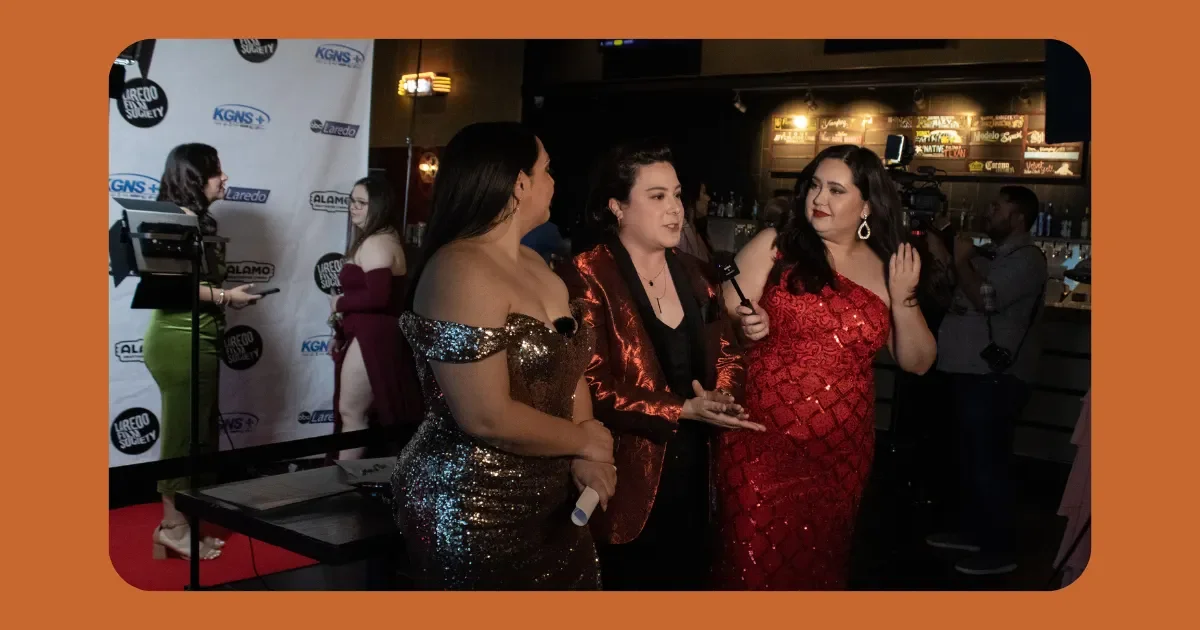
Laredo Film Society Oscars event
What we’ve learned, however, is that investment in the arts doesn’t have to be this elite ill-perceived reality people claim it to be. Data has shown that one of the leading metrics of a thriving city includes access to cultural and artistic experiences. In fact, investment in the arts can be powerful cultural and economic engines for our communities. It’s evident Cinemark, Drafthouse, or AMC theaters won’t invest in our communities — but we don’t have to be subject to their commercial interests to create meaningful spaces of our own. It’s possible to create a symbiotic relationship that meets public funding with community investment and reminds people that the narrative of the border doesn’t have to be reduced to border patrol or narco-violence. In fact, we’d argue the arts and education are the first places where these narratives can be challenged and a new reality imagined.
Laredo Film Society’s raison d’être is to shift this narrative away from arts and culture as inaccessible fields and show that cinema is for all. We aim to make film experiences accessible to those we serve and find power in our stories. I think the tragedy of the border — its exploitation for profit or political status can be beaten when people come together and focus on sustainable efforts for its building and prosperity.
We know this is possible because it’s happened before! We stand on the shoulders of Jovita Idar, an activist who stood up against the Texas Rangers, or our neighbors resisting in the fields of climate, voting rights, and beyond -but border citizens need to be reminded that these stories exist. We need to be reminded that we have power, and these systems can be challenged when we are informed. Often, it starts with a screen and it can end at city hall or any institution where we take charge of our communities. For us, the theater can be the first example…
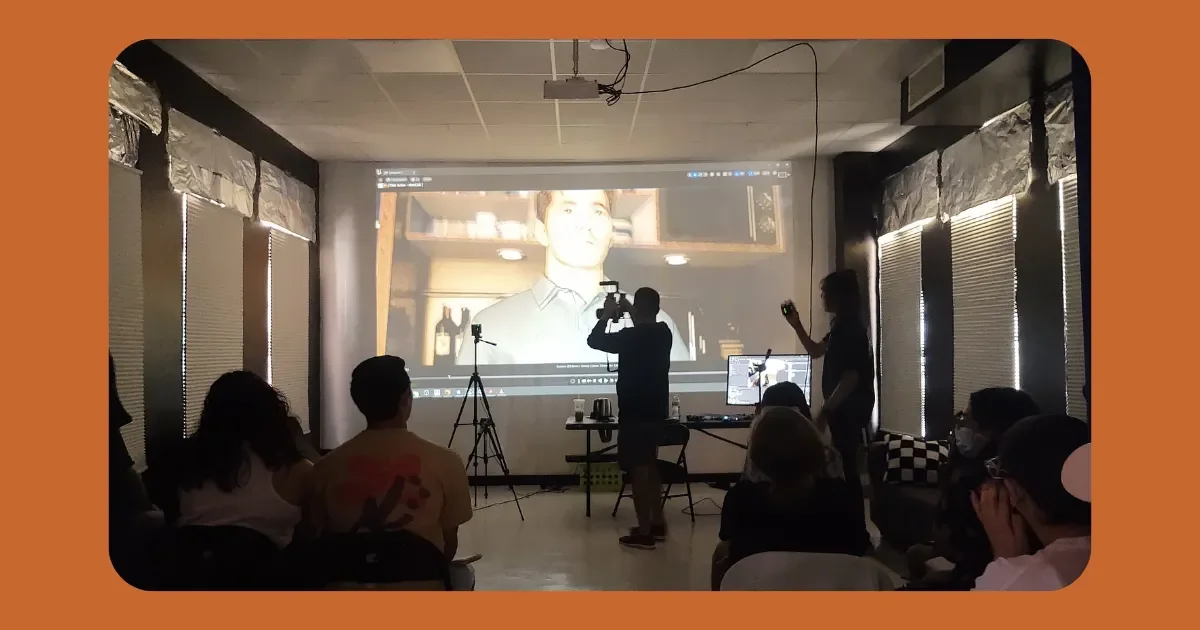
Lighting in Animation Workshop