A Reflection on Disability Through an Intersectional Lens
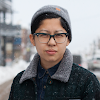
by Jason DaSilva, AXS Lab
The thing that excites me most about storytelling is its powerful ability to change an audience. My work takes on a qualitative approach to support quantitative data about people living with disabilities. In my films I try to create a lesson to be learned by the viewers. I don’t stop at showing them my experiences, I challenge them to take real meaningful action. I ask society to take responsibility for something they should be actively thinking about; accessibility isn’t rocket science.
As I continued to refine my artistic practice, multiple sclerosis continued its attack on my nervous system and I soon became unable to do the things I’ve always done. I quickly came to the realization that society does not view people, let alone filmmakers, living with disabilities in the same way as able-bodied persons. I found myself challenging able-bodied people and fellow filmmakers who said my films “inspired them” to clarify why they were inspired. I saw that the word “disability” was (and still is) associated with many negative stigmas and stereotypes. Accessibility standards were lacking, and there was a large absence of people living with disabilities making and telling stories. The injustices I saw and experienced prompted me to create AXS Lab as a way to help serve and advocate for people living with disabilities through media and technology.
AXS Lab has been going strong and ever-evolving since its founding in 2008. AXS Lab’s first project was to produce my feature film and work I am best known for, When I Walk. By 2012, AXS Lab was expanded to include AXS Map, a digital mapping tool that provides essential data to people living with mobility, vision, and sensory processing disabilities. Flash-forward to 2020 and the AXS Film Fund was founded to support documentary filmmakers and nonfiction new media creators of color living with disabilities. The fund is the first of its kind and pushes for the inclusion of BIPOC filmmakers living with a disability by prioritizing this body of creators’ access to the ability to be storytellers. 2020 very clearly brought about the need for compassion and serious change. Between heightened violence targeted at people of color, a fearful divided nation, and the global pandemic, it was clear that it was more important than ever to ensure that creators living with disabilities’ voices were elevated and not left behind. As a strong push for supporting POC voices was being made, I continued to see that filmmakers of color living with disabilities were still missing from the conversations about representation and voice in the film industry. I knew this needed to change.
The underrepresentation and misrepresentation of people living with disabilities in media and film is grossly under-discussed. There is a large problem of able-bodied people speaking on behalf of people with disabilities or portraying them on screen without including them in the process. Able-bodied people, no matter how well intentioned, are not positioned to accurately tell or portray the stories of people living with disabilities. Representation not only on screen, but also in our body of filmmakers is crucial to ensuring that the works we add to our collective societal discussions and explorations about the human condition are fair and just. This is why it is vital to include people living with disabilities on the list of underrepresented filmmakers that we are fighting for.
An unfortunate pattern I have seen over the years is that able-bodied people tend to only see other able-bodied people. I have found that many well intentioned organizations supporting various human rights, specifically, minorities, frequently overlook the intersection of the disability community in the work they do. In doing so, people living with disabilities are left out and organizations fail to support a portion of their constituency. Disability is not our sole identity. We too hold complex identities that span and intersect with race, gender, socioeconomic class, sexual orientation, religion, culture, age, and so on.
I think that people living with disabilities are not properly addressed because many able-bodied people have a fear of working with us. Whether it’s a fear of offending, or a fear of not knowing how to properly serve our community, that fear sadly exists. But this is not a productive way to think. Instead of being fearful, organizations should embrace the disability community and talk to us about what we need and how they can help us access the resources they have to offer.
I won’t lie. The lack of understanding that living with a disability intersects with other human rights movements is frustrating. I know that organizations who are not focused on disability aren’t purposely malevolent, but the harm they do by not actively working to include people living with disabilities is felt. There is a strong feeling that we are ignored and not included. We become burdened each time we have to make ourselves known in order to secure an “accommodation” (another word I have issue with, but that is for another time). Just as every POC community has been fighting to get their voices heard, the POC disability community fights for our place at the table. We deserve to be heard because we too are a part of the collective POC community. There needs to be a unified understanding that ableism is just as deeply rooted in our society and institutions as racism.
We are all part of organizations that are fighting for the voices of and space for people of color. I challenge us to push our fight for inclusion further and remember that people living with disabilities exist amongst those we champion. We need to collectively think about the measures we have in place to support them. Some simple ways are to utilize the advances in technology and ensure that our websites are web accessible. We should be using alt text on images we share, particularly including it in our social media kits. We should also be ensuring from the start that our events whether in person or virtual, have captioning and ASL interpreters readily available. There are small things that we as a community can do to ensure that as we traverse the complex landscape of serving people of color in filmmaking spaces that we do not forget about those also living with disabilities.
I am truly honored that AXS Lab is a part of Color Congress. The work that we are achieving together is vital for not only the filmmaking community, but the larger world beyond. Together we are broadening the legacy society is writing for future generations. We are the trailblazers that are not only setting the documentary film community on a path of full inclusion, but also leading by example.
Jason DaSilva is the President of AXS Lab and a filmmaker. AXS Lab is an organization dedicated to using media and technology to advocate for people with disabilities.