Armed With A Community
by Francis Cullado
In 2002, I had the privilege of being VC’s Getty Intern, when I blindly fell in love with the cultural abundance that communities created for each other. A period of awakening through the discovery of histories and stories documented on media that mirrored my own experiences. An ongoing moment powered by luminaries like VC’s former Executive Director, Linda Mabalot.
Linda was always looking towards the future by cultivating what she called “youngbloods”, an emerging generation to carry forward the mission. Her super power was to make you believe that you also had super powers. She believed in you before you believed in yourself.
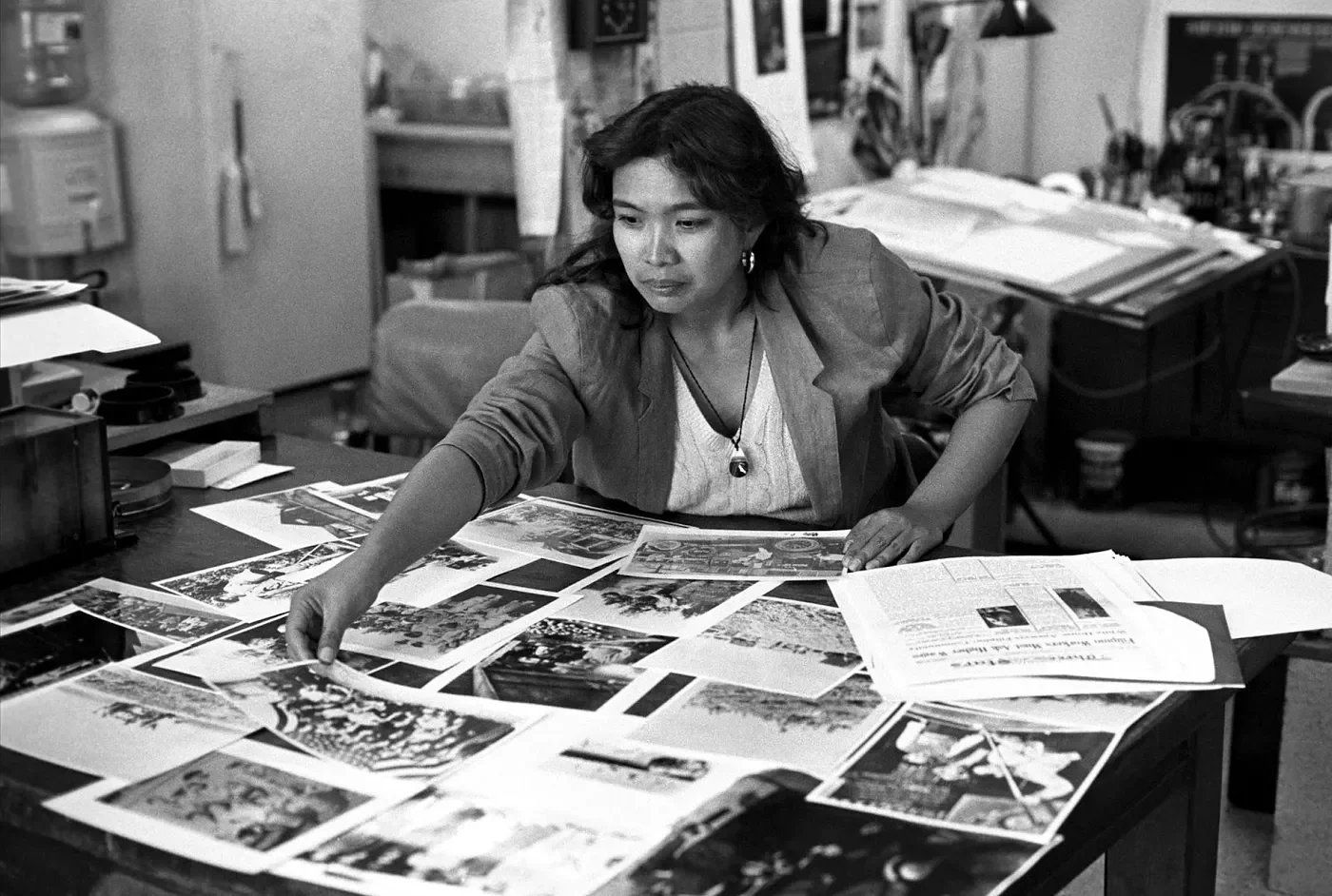
Linda Mabalot was the beloved Executive Director of Visual Communications from the mid-’80s until her passing in 2003. Here, she looks through images to be included in the organization’s 1984 large-scale photo exhibit PLANTING ROOTS: FILIPINOS IN CALIFORNIA.
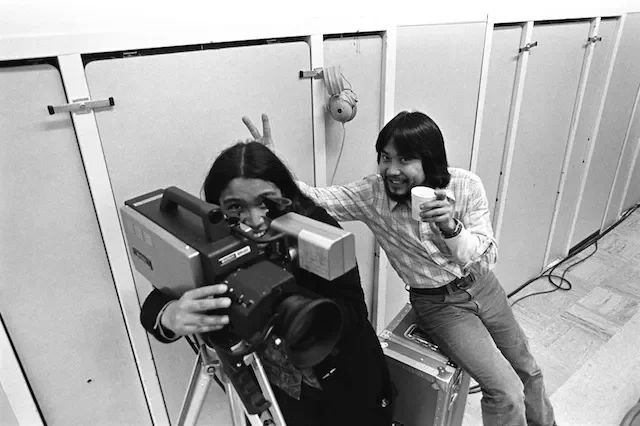
Linda and the camera, with VC Founder Duane Kubo.
In 2010, I returned as a staff member of the Los Angeles Asian Pacific Film Festival, and a year later joined the VC staff. In 2014, I became the chief steward of advancing our organizational values and culture.
Recent social, political, and cultural movements gave us the opportunity to pause and reflect. These challenging moments necessitated us to think about who and what is essential, and amplified the changes that needed to happen to renew our collective work towards equity and justice.
I often ruminate about these last 8 to 10 years, thinking about our work and our role in the field. And how/if our programs and presentations create impact.
Asking difficult questions such as:
Are we an organization that is an agent of change, or an impediment?
Are we doing anti-racist work? Or are we just a cog in a system of media and entertainment?
Are we still creating community, or are we inflating individual egos?
In 2020, Visual Communications reached its 50 year milestone because of community support and collective work. However, this anniversary is also a product of decades of sacrifices from staff, volunteers, and artists, surviving through periods of scarcity.
Through these reflections come renewed intentions and desired impact. In our continued challenge to improve and create brave spaces, we had to mitigate extractive practices to make our work more impactful.
It’s not about perfection, but progress. We needed to do better. We owed it to ourselves, artists, and communities.
And we were able to push forward because of a community contributing intellectual, emotional, and physical labor. Folks like Karim Ahmad, in which our collective values to create and sustain cultural abundance are reflected in RESTORING THE FUTURE. And folks like COLOR CONGRESS regenerating working spaces to converge organizations and movements led by People of Color.
During this time of isolation, being in community with values-aligned people kept us going.
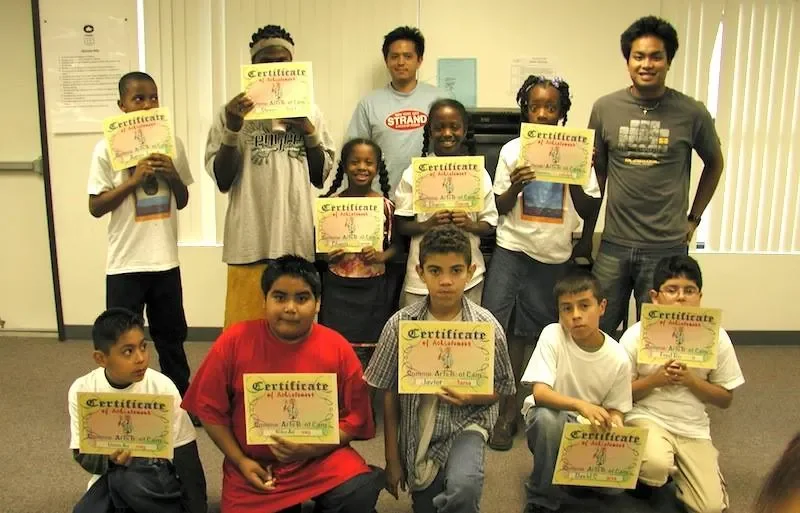
Me (top right) as a VC Intern in the Summer of 2002, assisting a Youth Media Arts Bootcamp. I’m not sure of what became of them, but I hope that we planted a seed that they could become storytellers.
Created by a group of artists and filmmakers to organize and empower communities through media, Visual Communications is the first media arts organization in the nation dedicated to the honest and accurate portrayals of the Asian American & Pacific Islander peoples and communities. Founding Director Robert A. Nakamura, along with Duane Kubo, Alan Ohashi, and Eddie Wong, armed themselves with cameras to document communities and movements.
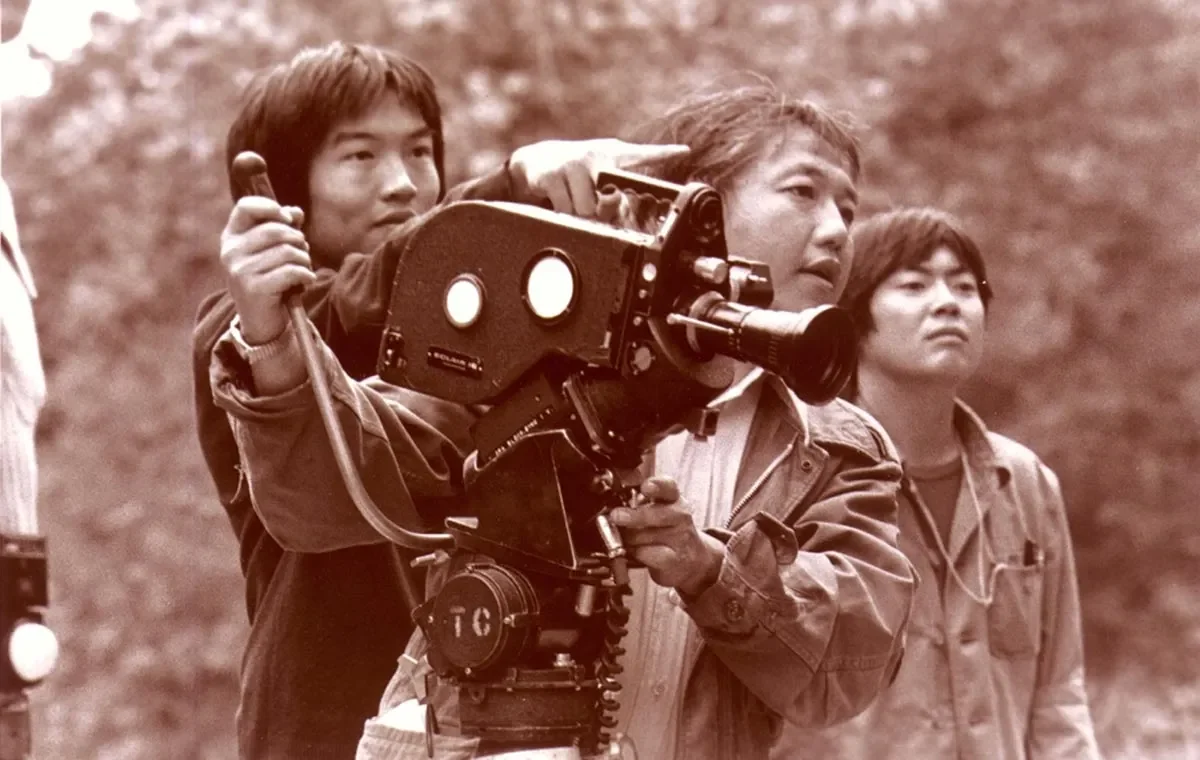
As project director Alan Kondo looks on, VC Founders Eddie Wong and Robert Nakamura line up a shot while on a location shoot in Los Angeles’ Griffith Park. The Éclair NPR, a heavy-duty 16mm camera that was standard-issue equipment from UCLA Film School, was a mainstay of many of VC’s pioneering motion picture documentaries throughout the 1970s and early 1980s.
From documenting communities in the 1970s to the Filmmakers Development Program in the 1980s, filmmaking was For Community, By Community.
Since 2002, Visual Communications’ ARMED WITH A CAMERA FELLOWSHIP FOR EMERGING MEDIA ARTISTS has developed and supported over 150 Asian American & Native Hawaiian / Pacific Islander filmmakers. Cultivating a rising generation of artists committed to social and political changes and movements, these storytellers empower communities and challenge perspectives through their creative works.
Launched during an era in which filmmaking was being democratized through digital tools becoming accessible, AWC is a branch of Visual Communications’ roots in preserving our stories through critical documentary filmmaking.
AWC was for a rising generation of artists at the turn of the millennium. In addition to creating a creative community of artists with shared values, the Fellowship addressed a need to professionally develop well-rounded artists who are looking at the field as a viable lifelong career and are committed to contributing to America’s developing cultural identities.
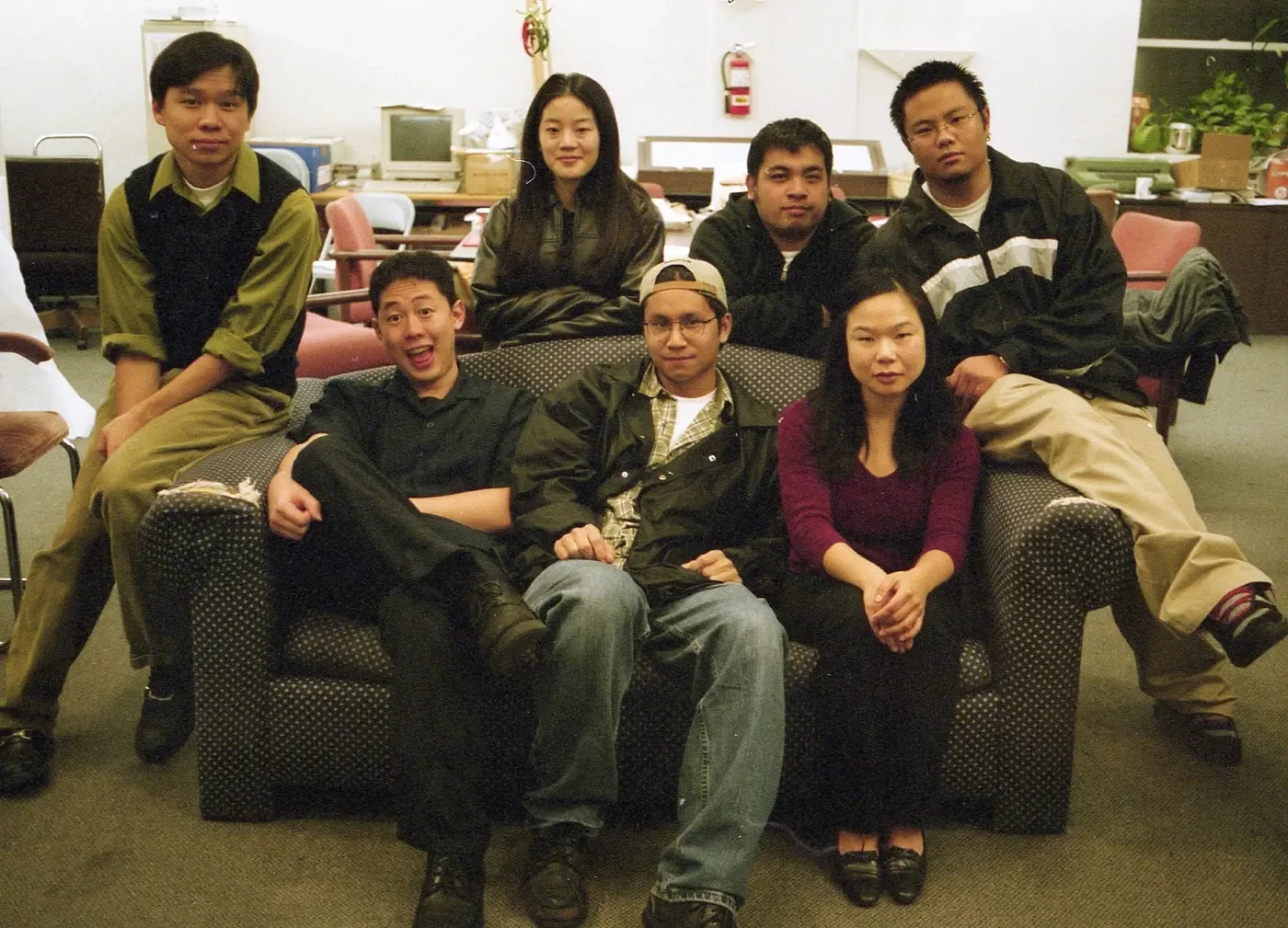
Inaugural AWC Class (2002) — Top: Yiuwing Lam, Alice Chen, Ernesto Foronda, Ralph Buado. Bottom: Shawn Chou, Neight Gee Tang, Michelle Yap Dizon. Photographed by Jeff Liu.
Through a 5-month process and with the guidance of artist mentors, the inaugural AWC Fellows created five-minute digital video pieces that premiered at the 2002 VC Film Fest (Los Angeles Asian Pacific Film Festival). Their works traveled to other festivals such as the San Diego Asian Film Festival, Urbanworld, and Cinemanila.
In the first 10 years of the Fellowship, we shared space with artists such as Ernesto Foronda, Daniel Hsiah, Evan Jackson Leung, Kristina Sheryl Wong, Rhianne Paz Bergado, Jin Yoo-Kim, Erin Li, Sarah Kim, and Micki Davis. Artists who shared diverse stories of identities, belonging, racism, mental health, gender roles, and social movements, through short documentaries, narratives, experimental films.
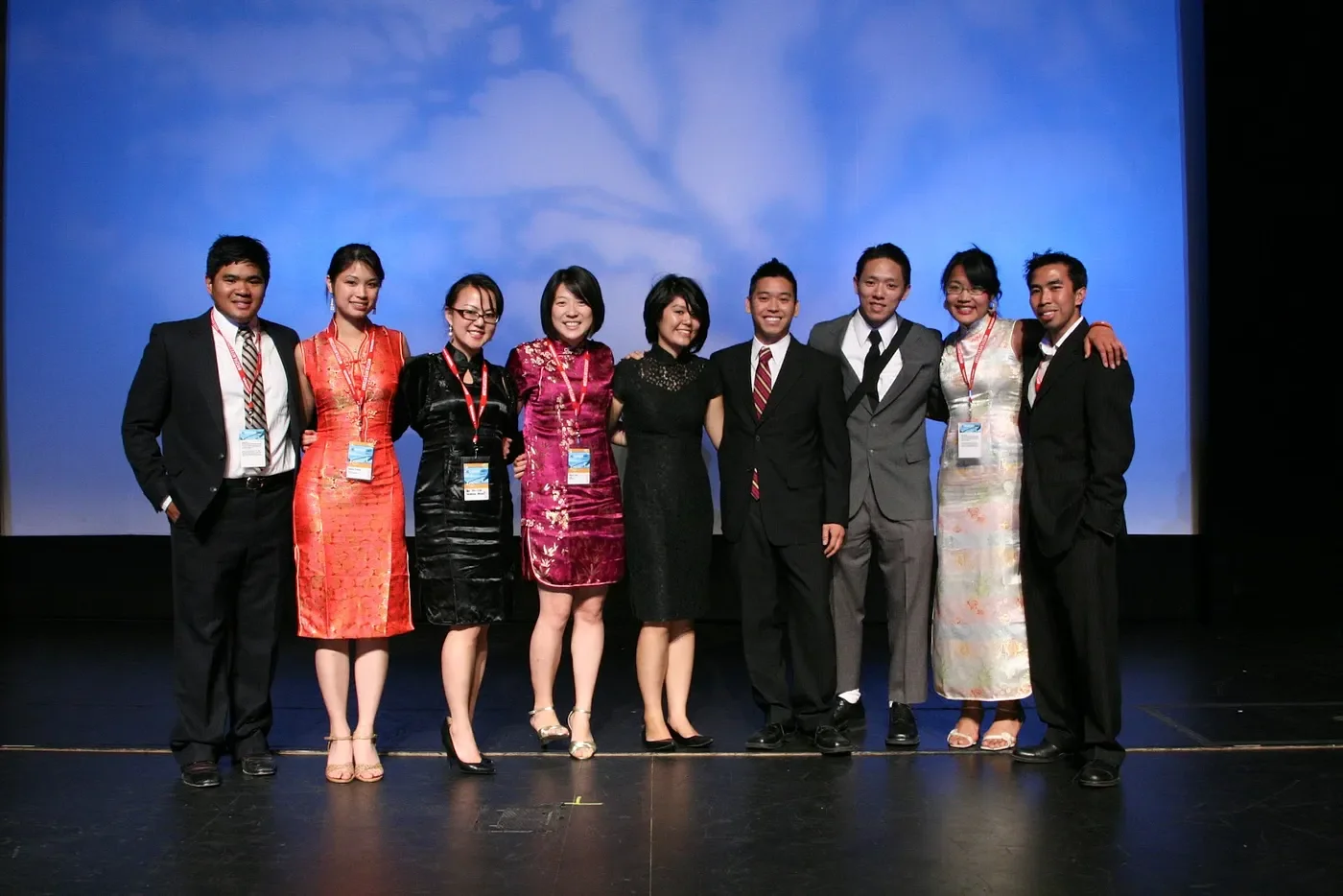
2007 AWC Fellows Rey Corpuz, Nadine Troung, Jin Yoo-Kim, Mina T. Son, Tam Tran, Jerry Chan, David Ngo, Jenni Tran Le — with Mitchell Dumlao. Photographed by Ernie Peña.
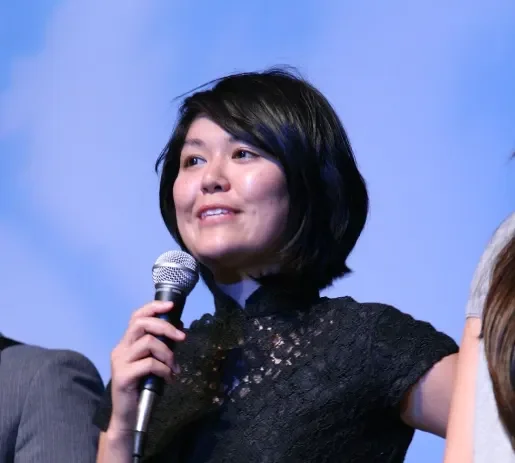
And during this time, we collectively mourned the loss of Tam Tran, a community leader working to pass The Dream Act.
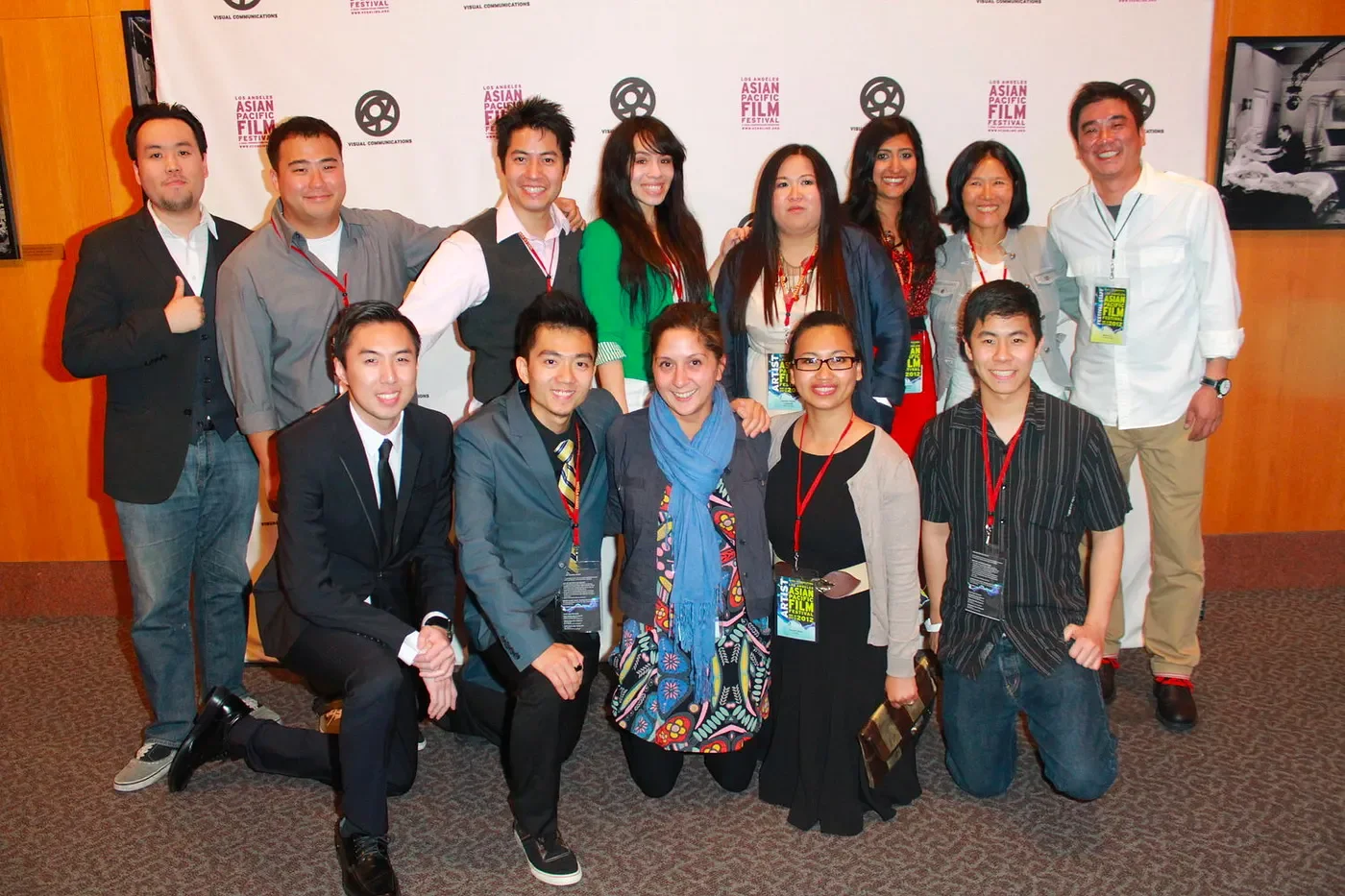
2012 AWC Fellows with UCLA Ethnocommunications filmmakers — Top: Timothy Tau, Jeff Man, Michael Shu, JoAnn Do Hockersmith, Jocelyn Saddi-Lenhardt, Veena Kampapur, and mentors Ann Kaneko & Milton Liu. Bottom: Kelly Li, Dieu Huynh, Micki Davis, Asiroh Cham, Kevin Lam. Photographed by Steven Lam.
The next decade also saw the emergence of artists like Christopher Yogi, Maritte Go, Eugene Lee Yang, Yoko Okumura, Roxy Shih, Miko Revereza, So Yun Um, David Liu, and Nirav Bhakta.
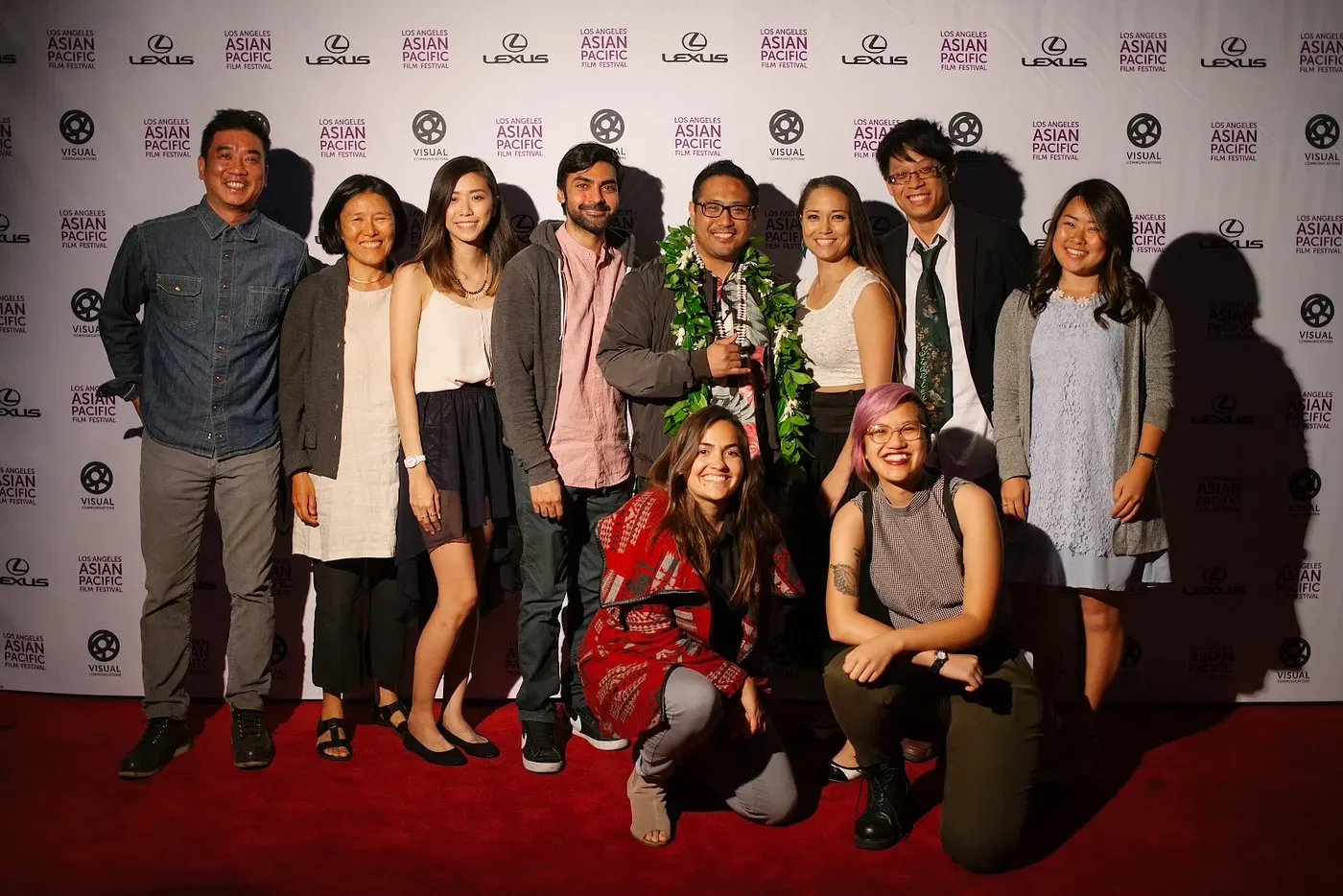
2016 AWC Fellowship — Top: Mentors Milton Liu & Ann Kaneko, Kayla Tong, Faroukh Virani, Conrad Lihilihi, Sumiko Braun, Stanley Wong. Bottom: Tulica Singh, Quyên Nguyen-Le — with Kristy Ishii. Photographed by Brandon Okumura.
As artists and their stories adapted to reflect then-current times, AWC themes and intentions shifted. And with leadership and staff changes, the structure of the program also changed. Some years with an age limit, other years without.
But year after year, the Fellowship continued the challenge to develop and create a community.
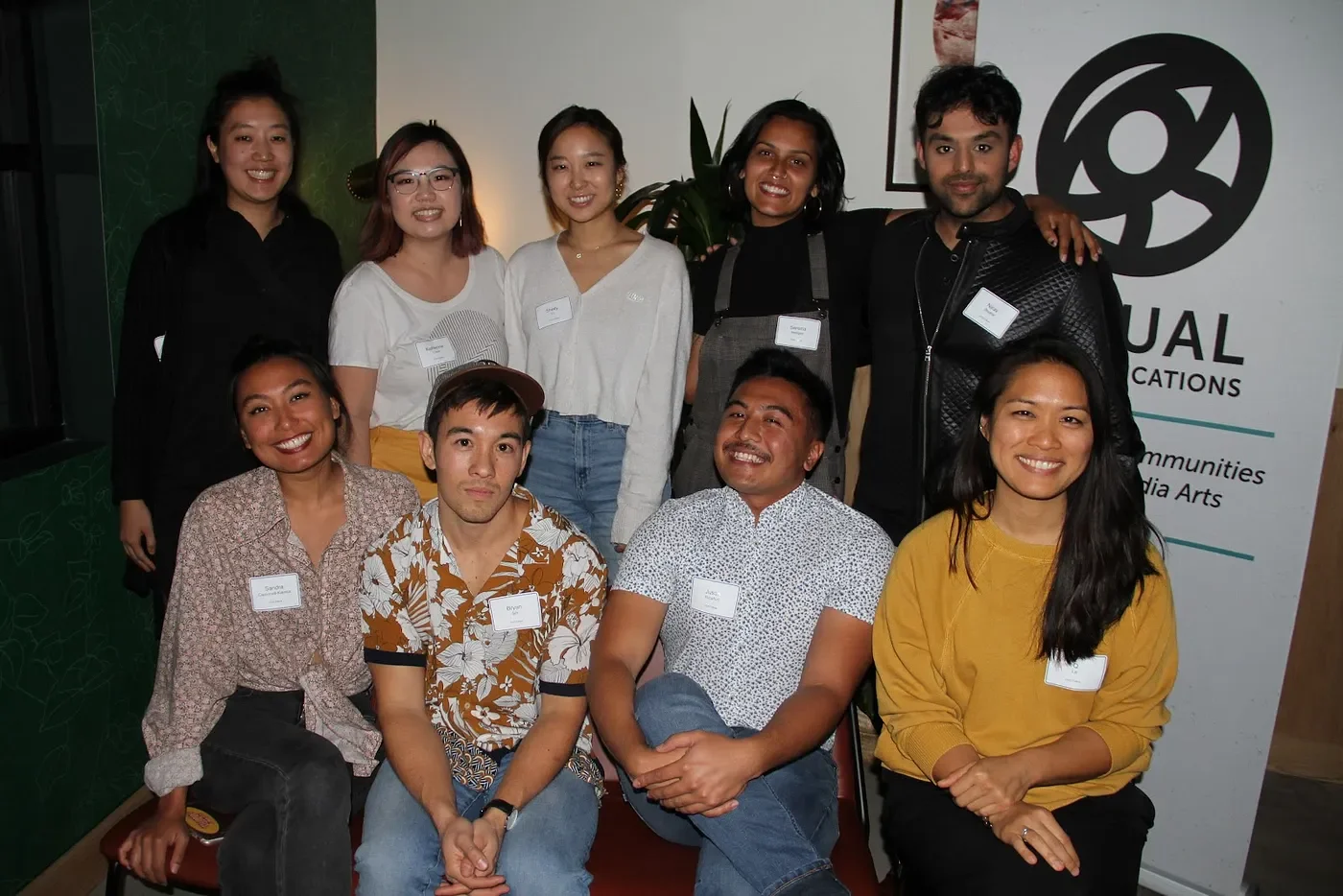
2020 AWC Fellows — Top: Kristy Choi, Katherine Chou, So Young Shelly Yo, Serena Hodges, Nirav Bhakta. Bottom: Sandra Lucille, Bryan Sih, Justin Ricafort, NamQuyen (Q) Le. Photographed by Abraham Ferrer.
Then during the 2020 Fellowship, COVID-19 stopped the world.
And then George Floyd changed the world. We’ve seen changes before through the lens of people armed with cameras.
A Renewal
Looking back at these two decades that I have been part of VC, the Fellowship transpired in times of being underfunded and under-resourced. As many organizations in our position, we found ourselves making difficult decisions to keep things going. Looking back, we ask ourselves: Did we do our artists (and communities) a disservice by challenging Fellows to create works with a limited budget of $500, knowing that for them to complete their works they needed to resource unpaid labor and services? Were we more focused on completing their individual works instead of providing deeper connections that fostered community? Did we eschew moments and opportunities to solidify ethical values as the basis of being accountable storytellers to our communities?
For VC and our programs such as AWC to create and sustain cultural abundance, we need to (re)commit to restorative values and practices that create systemic change outlined in Restoring The Future.
Uphold BIPOC artists, creative workers, and arts organizations as essential and as drivers of cultural power and change
Mitigate and abstain from extractive practices that does not fully value our artistic and cultural contributions
Build regenerative and accessible economic systems that allow artists, creative workers, and arts organizations to be equitably remunerated for their artistic and cultural labor
Create a network of alliances to shift institutions, corporations, and philanthropy that do not uphold our values, and transform them to become our investors in new systems and structures
As a process of renewal and restoration to create abundance, AWC Fellows stipends grew from $500 to $5,000. And instead of a 5 month Fellowship, it’s now a year-long Fellowship so a sequential set of Fellows can converge when one ends and the next one begins.
And we now look at wellness and joy as a guiding principle of the Fellowship. Sometimes we see filmmakers as primarily as artists, often forgetting that we have individual and collective needs to be acknowledged and supported as people first. People who want to belong and be accepted, before they are tasked to create communities.
And speaking of communities, especially in our focus on “Asian American & Native Hawaiian/Pacific Islander” emerging artists, we continue to question how this has formed and has been reshaped. Intersections and convergences are effective ways for us to safely connect with each other. But we also need to be brave and welcome collisions. It’s easy to coalesce as a community when we’re going against hate and white supremacy. However, the required work needed for us to build collective power is to confront issues that divide us. From across the dinner table to discuss why Black Lives Matter with our families, to acknowledging Asian settler colonialism in Oceania, these power structures are replicated and represented in the media. Most often, our always-present Indigenous interconnections are made invisible.
We have to mitigate our own unjust practices that create inequalities within our communities, especially this “AAPI” umbrella. We have to uplift and uphold Indigenous storytellers in spaces where Asian American artists may have privilege. We have to amplify artists who utilize media to preserve cultural traditions and present diasporic stories. We have to support communities engaging against movements of cultural appropriation/appreciation in the guise of diversity and inclusion.
What does it mean to have two decades of AWC and have only developed two NHPI artists in the Fellowship?
We recognize that Visual Communications has the privilege to create spaces for Asian and Pasifika communities to collide and converge. So in this latest volume of AWC, we are committed to creating community with Native Hawaiian and Pacific Islander emerging filmmakers and media artists.
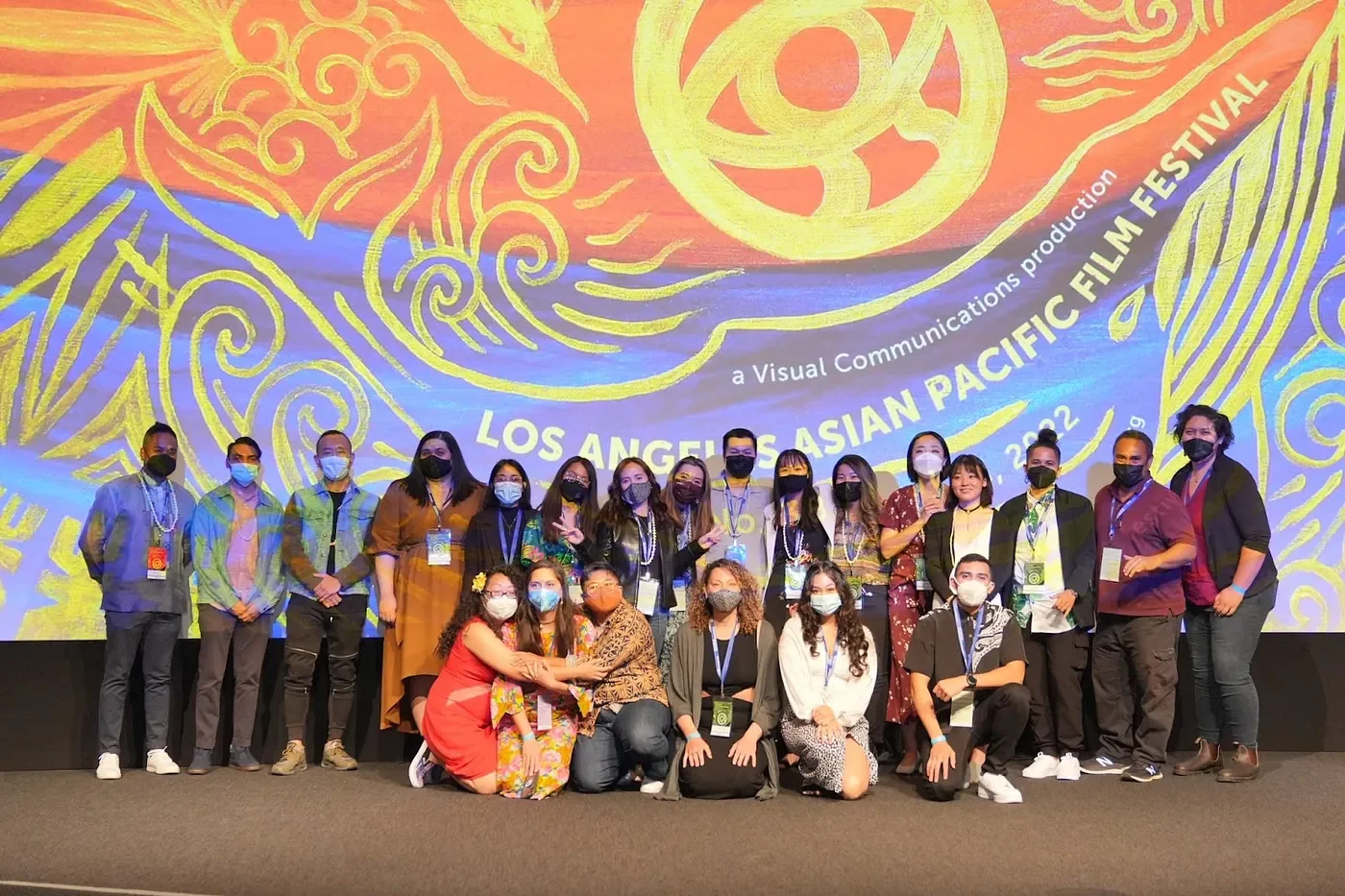
AWC Fellows 2022 & 2023 and AWC Alumni converge at the 39th edition of LAAPFF (May 5, 2022) — Top: Francis Cullado, Faroukh Virani, David Liu, Lauren To’omalatai, Iliana Garcia, Molvatu Sae-Ue, Melanie Lim, Olivia Stark, Brandon Soun, Candace Ho, Kitty Hu, Evelyn Hang Yin, Ziyao Liu, Pumehana Cabral, Misa Tupou, Melodie Turori. Bottom: Eseel Borlasa, Micki Davis, Kiki Rivera, Veialu Aila-Unsworth, Alexis Si’i, Peter Filimaua. Photographed by Steven Lam.
Visual Communications, with the work of staff and supporters, is going through a renewal process. Not just with AWC, but with other programs such as the Los Angeles Asian Pacific Film Festival, VC Archives, and Digital Histories.
As of this writing, we’re still unsure if our renewed intentions will create our intended impact. But what we do know is that progress is not linear. We learn, we reflect, and we adapt through shared struggles and connections. We renew our commitment to ourselves, artists, and communities.
We renew our commitment to fellow organizations who are doing amazing work in the field, especially through Color Congress, by developing and supporting artists to further our collective visions. Artists who understand ethics and accountability, and the privilege and power of upholding a camera. Artists who will challenge the systems that extract from our communities.
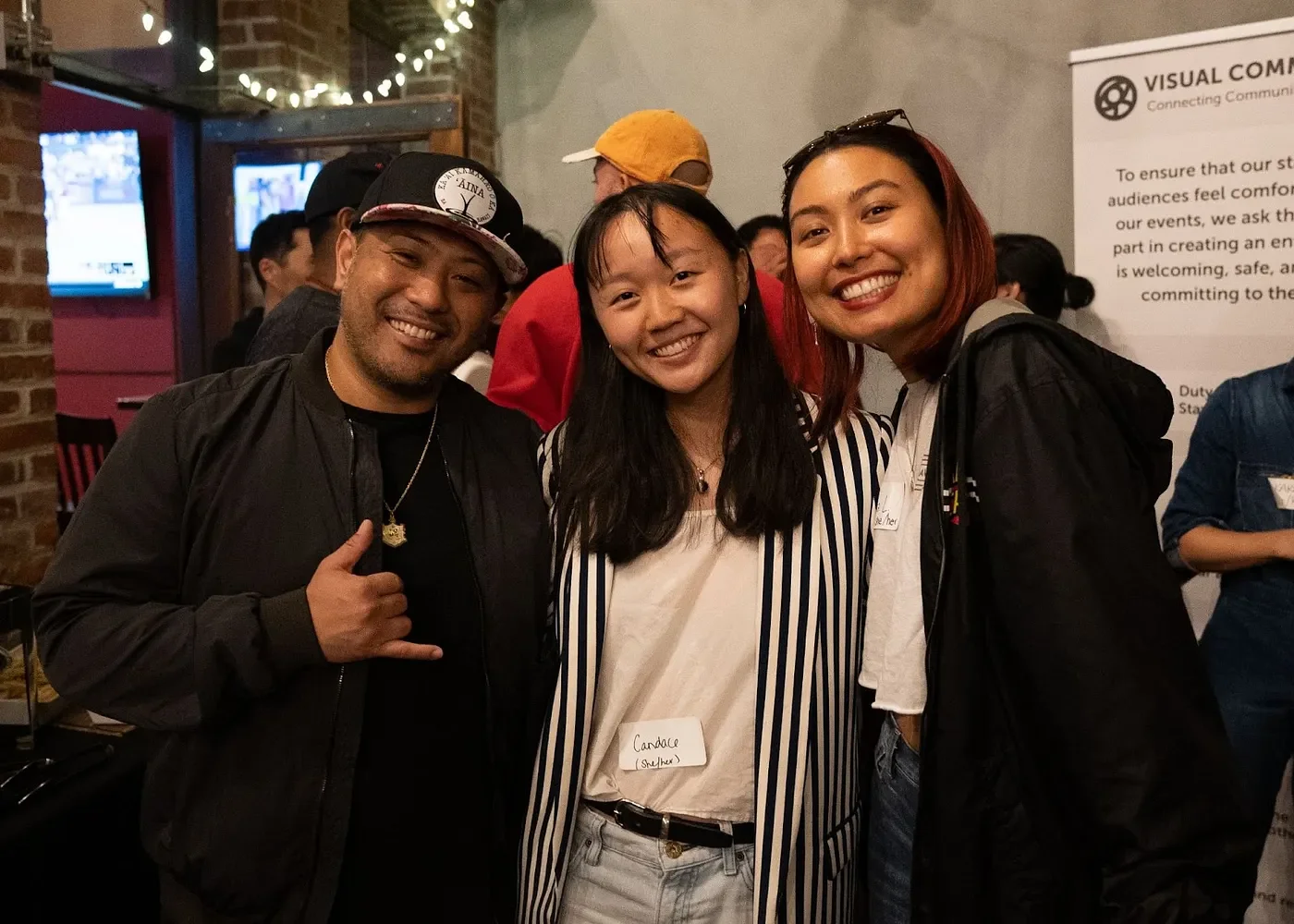
AWC Alums at a recent Renewal Gathering (September 20, 2022) — Conrad Lihilihi, Candace Ho, Sandra Lucille. Photographed by Jason Tiangco.
There’s certainly more work to be done. And we look forward to doing this work with you.
About Visual Communications
Founded in 1970 with the understanding that media and the arts are powerful forms of storytelling, Visual Communications creates cross-cultural connections between peoples and generations. Our mission is to develop and support the voices of Asian American & Pacific Islander filmmakers and media artists who empower communities and challenge perspectives. Created by a group of artists and filmmakers to organize and empower communities through media, Visual Communications is the first media arts organization in the nation dedicated to the honest and accurate portrayals of the Asian American & Pacific Islander peoples and communities. We are home to the VC Archives, one of the largest photographic and moving image collections on Asian Pacific experiences in America.
Francis Cullado is the Executive Director for Visual Communications. He began his service with the organization as a Getty Multicultural Undergraduate Intern in 2002. Since 2010, Francis has worked with various capacities such as the Development Director, Operations Director, and Festival Operations Director. He is a graduate of CSU Long Beach with a B.A. and M.A. in Asian & Asian American Studies, with a focus on cultural arts & performances, history, and human geography.